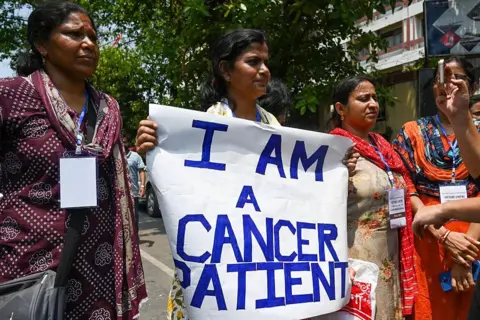
A French court has for the first time recognised cosmic radiation as a factor in the breast cancer of a long‑serving flight attendant.
Sixty‑nine‑year‑old Sophie Lainault, who worked for Air France from 1989 to 2019, sought recognition of her cancer as an occupational disease linked to her profession. The Bayonne court agreed, adding cosmic radiation to a list of three carcinogenic hazards for flight crews – passive smoking, long‑term night work and radiation exposure.
Smoking was authorised for Air France passengers until 2000, meaning Lainault would have been exposed to tobacco smoke during many flights. The court’s decision means she qualifies for early retirement and full reimbursement of any future treatment through the French health system.
Lainault’s lawyer, Elisabeth Leroux, said the ruling was a “fundamental precedent” that could encourage other women who have not yet taken the step of claiming occupational disease.
Over her 30‑year career she logged 12,600 flight hours, over half of which were night flights. Many of those routes, especially those crossing polar circles, exposed her to higher levels of cosmic radiation, as the Earth's magnetic field offers less shielding near the poles.
A recent Harvard Medical School study found that pilots and flight attendants had the highest proportion of radiation‑related cancer deaths among more than 500 professions, with 6.9% of deaths for cabin crew and 6.7% for pilots. This was higher than for nuclear technologists, who are routinely exposed to non‑cosmic radiation.
Professor Jim Smith, environmental science, cautioned that while high‑altitude exposure places crew at a small additional risk, it is difficult to attribute a single cancer case to radiation alone. He emphasised that the court’s ruling hinges on the broader legal framework recognising occupational hazards.
Air France stated it had not been involved in Lainault’s legal case and had not seen the court’s reasoning. The airline reiterated that “the health and security of our staff is an absolute imperative,” adding that every employee receives medical support that exceeds regulatory minimums.