In brief
The project has drawn mixed reactions, with government officials optimistic about economic boosts and job creation while local communities voice concerns over environmental impact and potential challenges from organized crime.
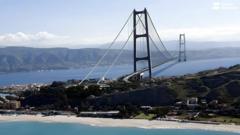
Italy’s government has given the green light for an audacious €13.5 billion project to construct the world’s longest suspension bridge, which aims to connect the renowned island of Sicily to the mainland region of Calabria at the southern end of Italy. This ambitious project, steered by Prime Minister Giorgia Meloni, who describes it as a vital investment for Italy's future, allows for the existing troubled history of the bridge to be revisited.Located in an area prone to seismic activity, the proposed bridge would span 3.3 kilometers (approximately 2.05 miles) and rise between two towering supports measuring 400 meters (1,300 feet) high. Plans include dual railway tracks and three lanes of automobile traffic on either side. Beyond simply improving connectivity, the Italian government hopes to qualify the bridge as a military expenditure to contribute to NATO’s defense spending goals, easing the financial burden on citizens.Transport Minister Matteo Salvini has welcomed the recent approval, setting an ambitious timeline to complete the bridge by 2032 or 2033. He expects the structure to generate up to 120,000 jobs annually, which could stimulate economic growth in Sicily and Calabria, two of the poorest regions in Europe. Nevertheless, the project requires final approval from the Italian Court of Auditors and various environmental agencies, both within Italy and at the EU level.Local opposition remains strong, with residents fearing property expropriation and potential legal challenges that could stall the project again. Notable political dissent was voiced by Senator Nicola Irto of the Democratic Party (PD), who termed the initiative “controversial and divisive,” asserting that resources should instead focus on improvements in local transportation and essential services like healthcare.Additionally, community leaders, such as Giusy Caminiti, the mayor of Villa San Giovanni, have expressed concern over the negative repercussions on their locales, urging for more comprehensive consultations. The grassroots group "No to the Bridge" has criticized the government’s announcement, framing it as a politically motivated decision rather than a well-evaluated technical proposal. They highlight that the bridge’s water usage could exacerbate existing drought conditions in both Sicily and Calabria—regions already grappling with these issues.As it stands, the only current means for trains to traverse the strait involves transporting rail cars onto ferries, a process that takes about half an hour. The planned construction of the bridge has undergone numerous delays since its conception over 50 years ago, often hindered by financial, environmental, and criminal uncertainty.