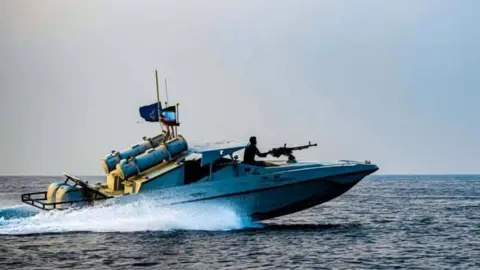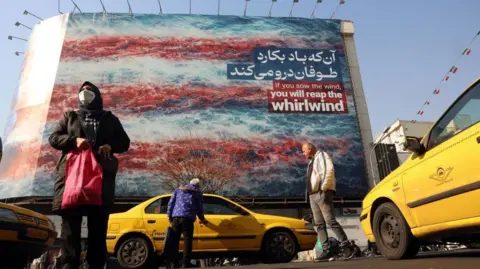
The arrival of the USS Abraham Lincoln carrier strike group into the US Central Command area of responsibility, close to Iranian waters, has sharpened the sense that a broader confrontation may be taking shape. Coming amid the most extensive and violent crackdown on protests in Iran in recent memory, the deployment underscores how close Washington and Tehran may now be to a direct showdown, closer than at any point in recent years.
Iranian leaders find themselves squeezed between a protest movement increasingly demanding the removal of the regime itself and a US president who has kept his intentions deliberately opaque, fueling anxiety not only in Tehran but across an already volatile region.
Iran's response to a potential US military strike may not follow the familiar, carefully calibrated pattern seen in earlier confrontations with Washington. President Donald Trump's recent threats, made in the context of Iran's violent suppression of domestic unrest, come at a moment of exceptional internal strain for the Islamic Republic. As a result, any US attack now carries a significantly higher risk of rapid escalation, both regionally and inside Iran.
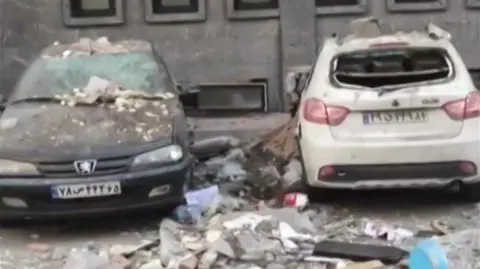
In recent years, Tehran has shown a preference for delayed and limited retaliation. For example, after US strikes on Iranian nuclear facilities in June 2025, Iran responded the next day with a missile attack on the US-operated Al Udeid Air Base in Qatar. This exchange was widely interpreted as Iran seeking to signal resolve while avoiding a wider war.
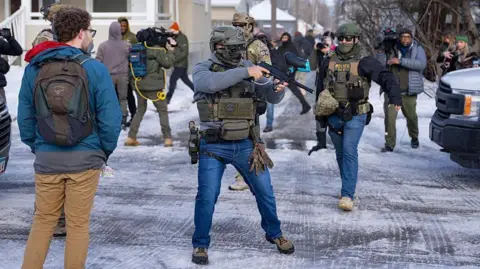
However, the current situation is marked by severe internal unrest, with protests met with a violent crackdown leading to significant casualties. The exact numbers cannot be verified due to a lack of access and an internet blackout, but reports suggest thousands have died. The Iranian government has accused external powers, particularly Israel, of inciting the unrest.
This backdrop complicates Iran's potential responses. A limited US strike might provoke heightened internal repression under the guise of maintaining order, while a more extensive attack could lead to catastrophic instability, risking broader regional conflict.
Both Washington and Tehran under these circumstances may misinterpret each other's calculations and intentions, leading to dangerous outcomes for both nations and the millions of civilians caught in the crossfire.
}