In brief
The prohibition of education for girls over 12 in Afghanistan has forced many, like 15-year-old Amina, to turn to madrassas, where they seek to continue their studies. While some madrassas offer academic subjects alongside religious teachings, concerns remain about the quality and ideological influence of the education provided, as well as the broader implications for girls' futures.
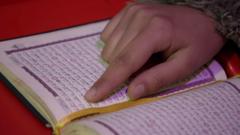
In Afghanistan, the new school year began with a painful reminder for many girls: the ongoing ban on education imposed by the Taliban. Amina, a 15-year-old girl who dreamed of becoming a doctor, reveals how her aspirations were crushed when her father informed her that girls could no longer attend school. The ban has lasted four long years, affecting over one million girls according to Unicef, the UN children's agency.As mainstream schools remain closed, many girls have turned to madrassas—religious educational centers focused on Islamic teachings. However, while some families can afford private tutoring in subjects like math, science, and languages, those relying on madrassas face uncertainty about their educational quality. Concerns stem from reports suggesting that the Taliban has integrated extremist content into madrassa curricula, as part of their ideological agenda.Amina attends the Al-Hadith madrassa in Kabul, a recently established institution founded by her brother, Hamid, who was moved to act after witnessing the effects of the education ban on his sister's dreams. In a cold basement classroom, Amina and her peers battle the chill while learning religious content, though some classes also offer subjects like midwifery and first aid. Unfortunately, the Taliban banned medical training for women last year.Afghanistan stands alone as the only nation where women and girls are entirely barred from secondary and higher education, which has been described as a systematic violation of their right to quality education. Since the ban's introduction, the number of madrassas has grown, with many now offering additional academic subjects alongside Islamic studies, although facilities remain basic.At another madrassa, Shaikh Abdul Qadr Jilani, students of varied ages receive education despite harsh conditions, such as inadequate heating. The school offers a blend of religious and academic subjects but struggles to provide adequate resources, particularly in formal academic areas. Staff express pride in their students, like Hadiya and Safia, who teach others despite limited job opportunities in their fields.UN officials have voiced urgent concerns about the Taliban's madrassa education system, emphasizing the vital need for reopening schools and universities for girls. Under current conditions, limited educational opportunities may increase the risk of radical ideologies in the country, posing threats that extend beyond Afghanistan's borders.Despite the adversity they face, students like Amina hold on to hope. She remains determined to see schools and universities reopen one day, believing firmly that her dream of becoming a heart surgeon is still within her reach.