In brief
Fregona, a picturesque town in northern Italy, is grappling with significant population loss as fewer babies are born and residents migrate elsewhere. Mayor Giacomo de Luca fears the closure of the local school due to dwindling enrollment. While national fertility rates remain alarmingly low, local initiatives and government efforts struggle to reverse this trend.
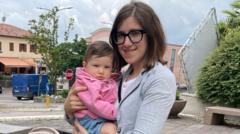
As the sun casts a warm glow over the scenic town of Fregona, nestled in the foothills of the Italian Alps, Mayor Giacomo de Luca reflects on the wave of closures that have swept through his community. Once bustling with life, the streets now bear witness to shuttered businesses — from supermarkets to barbershops — highlighting a heartbreaking reality: the village faces a demographic decline exacerbated by low birth rates and emigration.Standing near the local primary school, which is teetering on the brink of closure due to insufficient enrollment, De Luca expresses concern for the village's future. "We can't commence the new Year One class; we only have four children. The minimum funding requirement needs at least ten," he shares with palpable urgency. In just ten years, the population of Fregona has dwindled by nearly 20%, with only a handful of births reported in 2023. As the remaining residents grow older, the town risks becoming a ghost of its former self.In Italy, this demographic crisis is not isolated to Fregona. Across the nation, the population has shrunk by nearly 1.9 million inhabitants over the past decade, with birth rates plummeting for the past 16 years. Currently, Italian women average 1.18 births per woman — significantly lower than the EU average of 1.38 and far from the 2.1 needed to maintain population levels.Despite government initiatives to promote childbirth — including financial support and parental leave extensions — many citizens remain unconvinced. Valentina Dottor, a young mother in Fregona, articulates the dilemma: "It's a big decision to have children, especially returning to work while managing childcare." While she appreciates the government’s €200 monthly allowance for new parents, she notes the stark reality of limited access to affordable childcare.Yet, solutions are emerging from some companies in the Veneto region. One innovative response to dwindling fertility rates is the creation of a nearby creche by a coalition of local businesses, providing discounted daycare services to employees. Melania Sandrin, an employee of one such factory, shares how this new service allows her to maintain her job while ensuring her child's care is just moments away.Katia da Ros, CEO of the company leading this charge, believes the answer to Italy’s struggles lies not in monetary incentives alone but in strengthening community support systems. “Massive changes are needed,” she stresses, calling for more robust services like free kindergartens.Moreover, the government faces another avenue for addressing its demographic woes: immigration. With over 40% of workers at Irinox, one of the region's key manufacturers, coming from abroad, there is growing recognition that increasing foreign workforce participation may offer a path to economic stability.Recent events in nearby Treviso highlight the dire consequences of this crisis. A local primary school, Pascoli, was forced to close due to insufficient student numbers. The emotional impact of the school’s closure was palpable for parents and children alike, underscoring the sensitive interplay between dwindling birth rates and local educational resources.In future projections, experts warn that Italy could see its population decline by about five million within the next 25 years. Amidst this concern, locals like Eleanora Franceschi advocate for substantial investment in services rather than mere financial handouts, pushing for practical support like free summer camps to better accommodate working parents.As Italy grapples with the gravity of its demographic shift, communities like Fregona are at a crossroads, faced with the pressing question: how can they nurture a vibrant future in the face of declining birth rates? The answer lies not only in policy discussions but in cooperative community action and support for families — the foundation of a sustainable tomorrow.