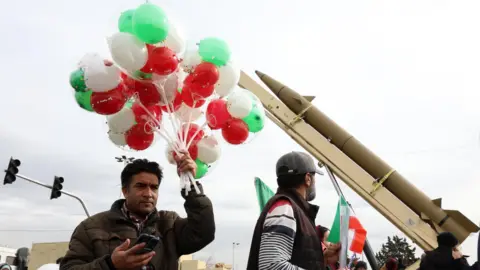
When clocks struck nine across Tehran on Tuesday, the night skies filled with sounds celebrating the 47th year of the Iranian revolution. From hotel balconies, the chants of 'God is greatest' resonated alongside brilliant fireworks lighting up the night. However, this year’s festivity was marred by shouts of 'death to the dictator' echoing ominously from within homes, capturing the discord present amid national celebrations.
This year's events come in the wake of a wave of protests, which swept through various cities just last month, marked by civilian rebellion against the government's oppressive tactics. The protestors faced crackdowns resulting in significant loss of life.
In contrast, the mood of this year’s anniversary seems to encapsulate both a fervent devotion to the revolution's ideals and a growing exasperation with the state of living under rising prices and economic turmoil. President Masoud Pezeshkian condemned external influences for the unrest while simultaneously acknowledging the government's shortcomings.
As families marched under a warm winter sun with joy and pride, slogans declaring 'death to America' and 'death to Israel' filled the air. Yet beneath the spirited facade lies a populace fraught with anxiety and a desire to voice their grievances against an increasingly intolerant regime.
Amidst this backdrop, many Iranians expressed legitimate concerns about the economic decline affecting their daily lives, while simultaneously showcasing an unwavering loyalty to their cultural and national identity. This blend of fervor and frustration highlights Iran's complex socio-political landscape as it stands at a crossroads, facing its toughest challenges in decades.
This year's events come in the wake of a wave of protests, which swept through various cities just last month, marked by civilian rebellion against the government's oppressive tactics. The protestors faced crackdowns resulting in significant loss of life.
In contrast, the mood of this year’s anniversary seems to encapsulate both a fervent devotion to the revolution's ideals and a growing exasperation with the state of living under rising prices and economic turmoil. President Masoud Pezeshkian condemned external influences for the unrest while simultaneously acknowledging the government's shortcomings.
As families marched under a warm winter sun with joy and pride, slogans declaring 'death to America' and 'death to Israel' filled the air. Yet beneath the spirited facade lies a populace fraught with anxiety and a desire to voice their grievances against an increasingly intolerant regime.
Amidst this backdrop, many Iranians expressed legitimate concerns about the economic decline affecting their daily lives, while simultaneously showcasing an unwavering loyalty to their cultural and national identity. This blend of fervor and frustration highlights Iran's complex socio-political landscape as it stands at a crossroads, facing its toughest challenges in decades.