In brief
In 1961, David Hockney painted "We Two Boys Together Clinging", a tender embrace between two men that risked legal penalties. The work marked an early artistic protest until Britain partially decriminalised same‑sex relations in 1967. Hockney continued to flood his canvases with intimate gay scenes, broadening the cultural acceptance of queer life. Critics say that even his later, brightly coloured pool scenes kept that quiet defiance, celebrating joy while reminding viewers of earlier oppression. Hockney’s art remains a focal point for discussions of LGBT history and the power of visual storytelling.
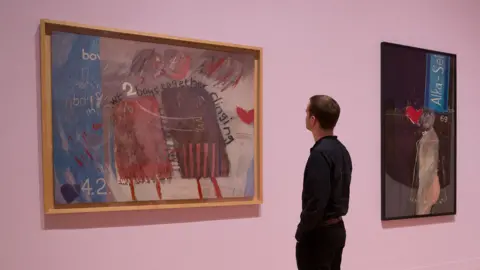
In 1961, British painter David Hockney–then a student at the Royal College of Art–created We Two Boys Together Clinging, a tender double‑embrace that forced viewers to confront a gay couple at a moment when homosexuality was still a crime in the UK.
The painting’s subtitle, taken from a Walt Whitman poem, underscores its quiet dignity. At the time the Before 1967, same‑sex acts were prosecutable under the Sexual Offences Act 1958; the 1967 reform only allowed private relations between men over 21. Hockney, however, had already chosen to display his work without apology, making a visual declaration that gay love was both ordinary and beautiful.
Artists and cultural historians note that the picture put the artist in the lead of a subtle, yet powerful–political narrative. “Hockney was unashamedly proud of his queerness before the law changed,” says Dominic Bilton, co‑leader of the Queer British Art Network. By painting gay intimacy as a domestic, everyday scene, he challenged the dominant caricature of queer life.
The vanguard did not stop with the 1961 canvas. In 1964 Hockney’d crossed the Atlantic and painted his famed swimming‑pool series, culminating in the iconic A Bigger Splash. The quiet, joyous images carry a subtle criticism: they celebrate living in full colour even while society remained hostile.
Critics note that Hockney’s later works kept the same provocative spirit. Writer Will Gompertz declares: “Even his later canvases were radical; they celebrate life and question the notion that admiration must be cynical.” His paintings stay a reminder that public perception can be shifted by simply opening a window to unseen worlds.
Today, the legacy of Hockney’s early prints remains crucial for researchers studying freedom of expression. As art‑historian James Marshall writes, “It matters that that history is remembered, because it tells us how a society might transform its romance with itself.”
The best part of Hockney’s oeuvre, many say, is that it gently forces viewers to look beyond labels. It turns the act of seeing into a quiet rebellion, a permanent reminder that love, in any form, deserves to be seen with open eyes.