In brief
In a troubling repeat of events, a SpaceX Starship rocket faced an explosive failure shortly after takeoff, leading to dangerous debris raining down in the Caribbean. This marks the second consecutive unsuccessful mission for the company as officials assess the incident and potential safety improvements.
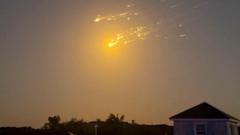
A SpaceX rocket met with an unfortunate fate shortly after its launch from Texas on Thursday, resulting in scattered debris and flight disruptions across several airports in Florida. The uncrewed Starship experienced what SpaceX termed a "rapid unscheduled disassembly" during its ascent, losing contact with ground operations. The colossal Starship, measuring 123 meters (403 feet), lost control soon after liftoff, although no injuries have been reported.Footage shared by observers in the Caribbean depicted flaming debris falling from the sky, alarming residents in various island nations, including The Bahamas. This marked the eighth mission attempt for the Starship and represents the second consecutive failure for the rocket, which was designed to re-enter Earth's orbit over the Indian Ocean following a one-hour flight. Fortunately, the Super Heavy booster, essential for its ascent, successfully returned to the launchpad.SpaceX, helmed by billionaire Elon Musk, assured that safety teams promptly coordinated with officials for "pre-planned contingency responses." Following the explosion, the company indicated that it would analyze the flight data to identify the root cause of the failure, specifically noting that the incident coincided with the loss of "several" engines. Their statement emphasized the importance of learning from such setbacks to enhance Starship's reliability.Safety regulations mandated flights at Miami and Orlando airports to pause while officials assessed the falling debris risk. The Federal Aviation Administration (FAA) confirmed that the incident had briefly delayed air travel in and out of these airports. This unfortunate occurrence follows a similar test failure in January, which resulted in property damage in the Turks and Caicos Islands and previous flight disruptions.The FAA has been monitoring SpaceX Starship launches closely, with the agency still investigating the earlier January incident at the time of Thursday's launch. The government of the Turks and Caicos stated that they were in communication with US authorities and SpaceX and would keep the public updated on safety measures.Starship, recognized as the largest and most powerful rocket ever constructed, plays a pivotal role in Musk's plans for interplanetary travel, particularly focusing on colonizing Mars. SpaceX envisions the Starship as fully reusable, while NASA has plans to utilize a modified version of the spacecraft for its Artemis missions aimed at returning humans to the Moon. Looking to the future, Musk's aspirations for Starship include long-range voyages to Mars, projecting about a nine-month journey each way.