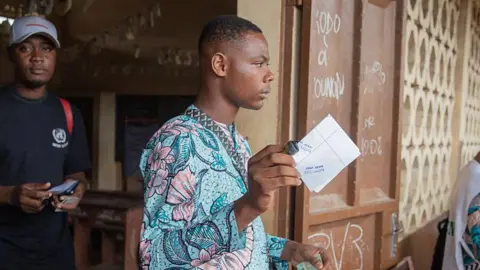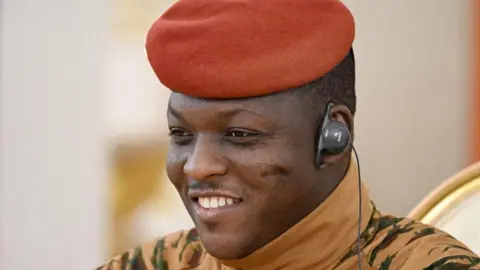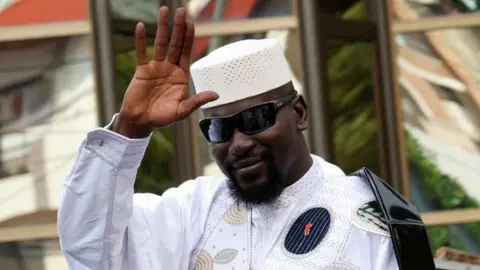
In a dramatic turn of events in Guinea, Gen Mamady Doumbouya, the leader of the military junta, appears to have a commanding lead in the presidential elections. Early results show Doumbouya capturing more than 80% of the votes in several districts across the capital, Conakry, as well as in other key areas.
This controversial election has drawn sharp criticism from civil society groups and opposition parties, with many labeling it a 'charade' due to the exclusion of major opposition figures, particularly from the RPG Arc en Ciel and UFDG parties. Accusations of electoral irregularities have marred the polling process, and concerns are heightened by reports of social media restrictions aimed at limiting public discourse on the election results.
With internet monitoring organization NetBlocks confirming restrictions on popular platforms like TikTok, YouTube, and Facebook, many are questioning the junta's intentions to stifle dissent as the nation awaits official results. This is part of a broader pattern, as Gen Doumbouya had previously criticized former president Alpha Condé for similar tactics before overthrowing him in a coup four years prior.
Initially pledging not to seek election, Doumbouya's shift to a candidacy after a new constitution allowed him to run has left many Guineans skeptical of his promises. While he enjoys considerable support among the youth, the general has faced heaviness for oppressing political opposition, banning protests, and limiting press freedoms leading up to this election.
Despite having rich natural resources, including the world's largest reserves of bauxite, Guinea struggles with high poverty rates. Observers watch closely as the implications of this election unfold, particularly regarding the country's path toward civilian governance and democratic principles.