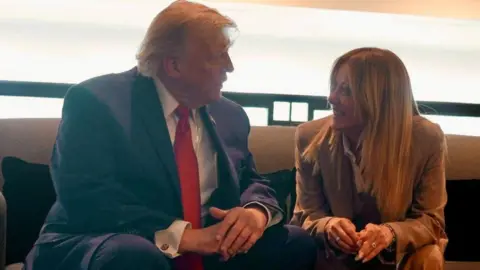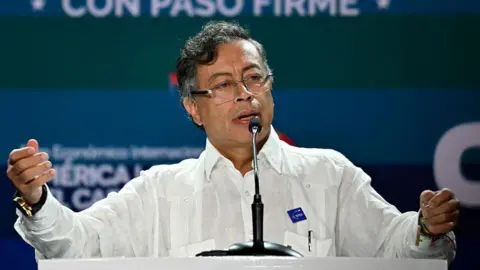
Colombian President Gustavo Petro is heading to Washington for a high-stakes trip to meet US President Donald Trump, the first in-person meeting between the two after months of escalating tensions and angry rhetoric.
Venezuela, drug trafficking, oil, security and US strikes on alleged drug vessels will be high on the agenda when they meet at the White House on Tuesday.
While the two men were cordial in a phone call after the 3 January US military operation to seize Venezuela's President Nicolás Maduro, Petro has since stated he believes there is a real threat of military action against Colombia. Trump has previously indicated that a military operation in Colombia sounds good.
The upcoming meeting follows months where both leaders exchanged barbs, with Petro criticizing US strikes on alleged drug boats and the White House's immigration policies.
In an interview with the BBC last month, Petro compared US Immigration and Customs Enforcement (ICE) agents to Nazi brigades and accused the US of treating other countries as part of its empire.
Trump has accused Petro's government of inadequately addressing the flow of cocaine to the US and has vowed to expand strikes to land targets across Colombia and Venezuela. However, following a cordial phone conversation, there seemed to be a thaw in their relations, with a Colombian official describing it as a significant shift from both sides.
Colombia's Foreign Minister Rosa Yolanda Villavicencio stated that the focus would be on shared security concerns regarding Venezuela during the meeting. Analysts indicate that illegal activities along Colombia's border with Venezuela, particularly by the National Liberation Army (ELN), complicate efforts for cooperation on security and anti-drug operations.
Though tensions remain, mutual cooperation continues between US and Colombian military forces as well as between the US Drug Enforcement Administration (DEA) and Colombian authorities. There exists concern that failing to mitigate the cocaine trade may undermine diplomatic relations, affecting intelligence cooperation critical to anti-drug efforts.
Petro's leadership is also on the line as he approaches the end of his term, with implications of this meeting affecting support for his chosen successor, Senator Iván Cepeda. Experts suggest that regardless of the meeting's outcome, Petro’s approach may position him well in domestic politics.