In brief
U.S. District Judge Sara Ellis has ordered immigration enforcement agents in Chicago to wear body cameras while engaging with the public. The mandate comes after a series of tense confrontations between agents and protesters during immigration crackdowns, which utilized tear gas and aggressive measures. As community opposition to U.S. Immigration and Customs Enforcement (ICE) grows, the court seeks to ensure transparency and accountability among law enforcement. Judge Ellis expressed concern for compliance with her orders and will require the field director to appear in court to provide updates.
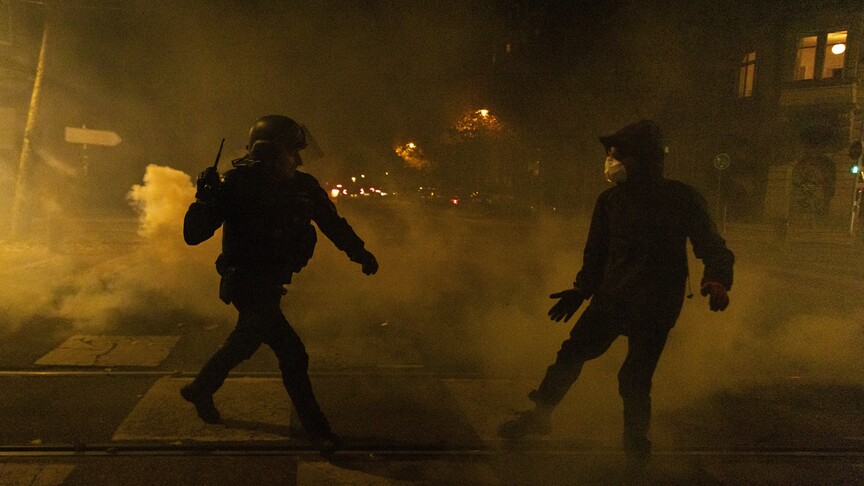
CHICAGO (AP) — Federal immigration officers in the Chicago area will be required to wear body cameras, a judge said Thursday following the use of tear gas and other aggressive measures against protesters.
U.S. District Judge Sara Ellis expressed her surprise, stating she was a little startled after witnessing television images of the clashes between agents and members of the public during President Trump’s immigration enforcement operations.
I live in Chicago if folks haven't noticed, she remarked. And I'm not blind, right?
Community efforts to counter U.S. Immigration and Customs Enforcement (ICE) have intensified in Chicago, where local groups are taking action to monitor ICE activities and document encounters involving agents. According to the latest data, more than 1,000 immigrants have been arrested in the city since September.
In a related matter, attempts by the Trump administration to deploy National Guard troops to assist in immigration enforcement were halted last week by another court ruling.
Judge Ellis had previously mandated that ICE agents in Chicago must wear badges and prohibited them from employing certain crowd control techniques against peaceful protesters and reporters. I'm having concerns about my order being followed, Ellis noted.
During the recent hearings, Ellis added that all agents participating in what is termed Operation Midway Blitz must wear body-worn cameras that are to be activated at all times.
U.S. Justice Department attorney Sean Skedzielewski attributed the court's concerns to one-sided and selectively edited media reports, indicating that immediate distribution of cameras to agents would not be feasible.
I understand that. I would not be expecting agents to wear body-worn cameras they do not have, Ellis acknowledged, suggesting that arrangements for camera distribution could be determined later. The court will also require the field director of the enforcement operation to appear in court on Monday.
In 2024, ICE began the deployment of approximately 1,600 body cameras to agents involved in Enforcement and Removal Operations. At that time, the cameras were slated for use in cities such as Baltimore, Philadelphia, and Washington, D.C. Other divisions of the Homeland Security Department also require specific agents to utilize body cameras, with U.S. Customs and Border Protection releasing body-camera footage in instances where force has been employed by its agents.