In brief
Route 66, known as the 'Mother Road', celebrates its 100th anniversary this year. Originally designated to connect the industrial Midwest to the Pacific Coast, it has become a symbol of American culture and adventure. From its historical significance during events like the Dust Bowl to its evolution into a road trip destination filled with quirky attractions, Route 66 remains a beloved route for travelers seeking a taste of nostalgia and Americana. Despite the modern interstate system diminishing its prominence, efforts to preserve its legacy continue across the states it serves.
ALBUQUERQUE, N.M. (AP) — There are faster ways to get from Chicago to Los Angeles, but none have the allure or cultural cachet of Route 66.
To John Steinbeck, it was the Mother Road that led poor farmers from Dust Bowl desperation to sunny California. To Native Americans, it was both an economic boon and a source of historical scars. For Black travelers, it represented sanctuary amid segregation, while music fans sought their kicks along its famed path.
This year marks the 100th anniversary of Route 66. Though it lost its status decades ago as a primary highway, people from around the globe still flock to experience the quintessential American road trip, rich with neon lights, kitschy motels, and local flavors.
“It’s an essential part of American culture and history,” declares Sebastiaan de Boorder, who, with his wife, revitalized The Aztec Motel in Seligman, Arizona. “The historical aspect is a significant part of American culture, influencing its character.”
The Dream
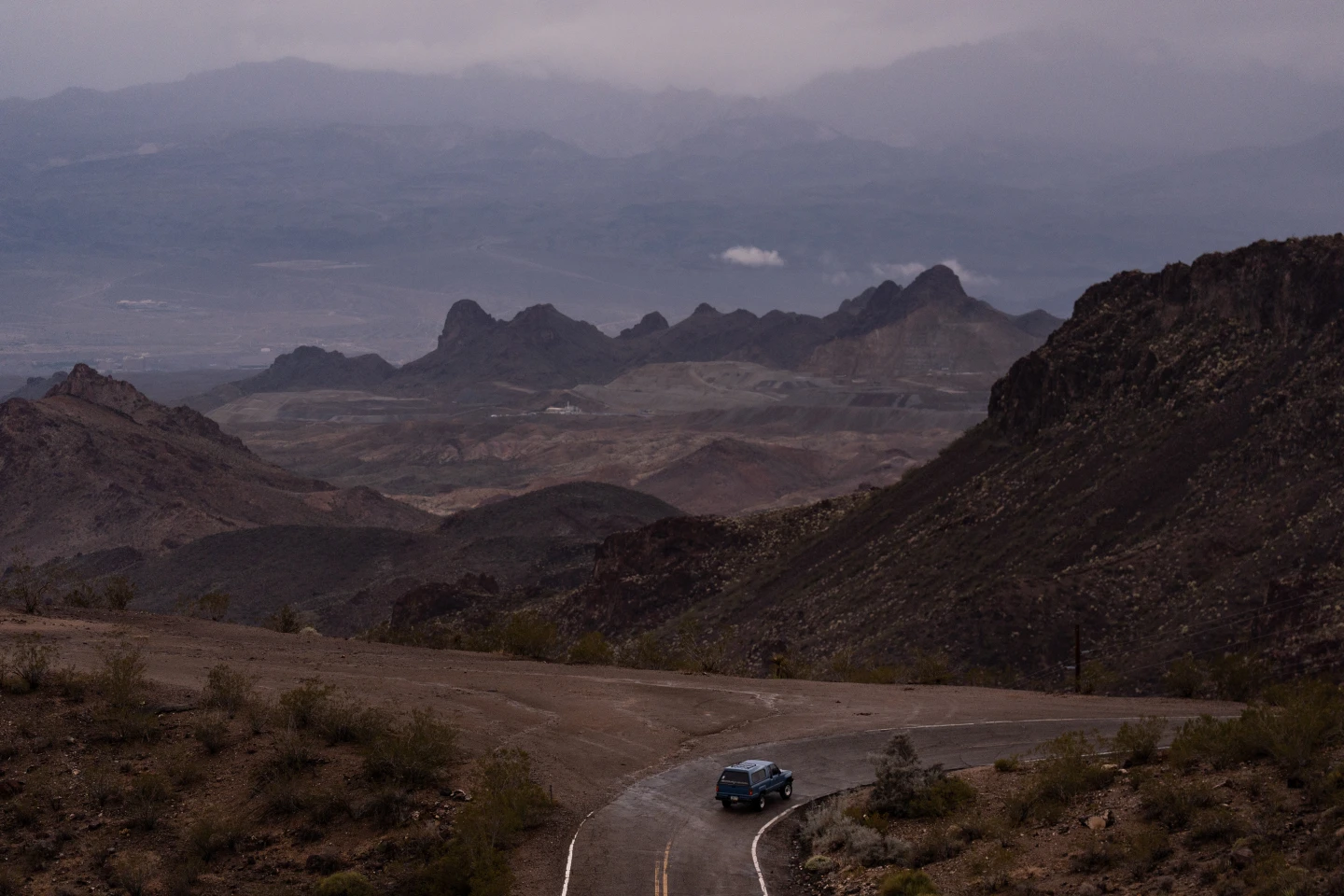
Route 66 winds approximately 2,400 miles (3,860 kilometers) from Chicago through Missouri, Kansas, Oklahoma, Texas, New Mexico, and Arizona, concluding in Santa Monica, California. It was originally stitched together in 1926 from Native American trading routes and dirt roads aiming to link the industrial Midwest to the Pacific Coast.
Oklahoma businessman Cyrus Avery, hailed as the Father of Route 66, envisioned it as a conduit for connecting rural America and creating new opportunities for commerce.
Avery knew the number 66 would be catchy for marketing, instantly lodging it in drivers’ minds; indeed, Route 66 has been celebrated in movies, literature, and song, becoming a post-World War II emblem of optimism and mobility.
Waves of Migration
Since its inception, Route 66 has embodied the promise of prosperity, transforming into a literal path of hope for migrants escaping the hardships of the Dust Bowl and Great Depression. During WWII, it facilitated troop movements and served various economic roles.
“People are drawn by a sense of adventure and curiosity. This is the road of dreams,” states historian Jim Hinckley.
Throughout the decades, roadside diners and motels flourished, with imaginative entrepreneurs enticing motorists with uniques attractions like rattlesnake pits, totem poles, and mouth-watering eats. The Cozy Dog Drive In in Springfield, Illinois, known for its breaded hot dogs on a stick, is just one example of how food became integral to the road experience.
A Divided Highway
While Route 66 provided economic opportunities for Native American tribes, it also scarred tribal lands through eminent domain and perpetuated cultural stereotypes. Over half the highway crosses through Indian Country, often presenting a simplified version of rich, diverse cultures.
The Laguna Pueblo, west of Albuquerque, saw restaurants and service stations emerge, many operated by veterans skilled at roadside assistance. Tribes have used the highway to build profitable businesses, from casinos to burger joints.
Conversely, during the Jim Crow era, Black travelers faced unique challenges, relying upon guides like the Green Book for safe lodging. The Threatt Filling Station in Oklahoma served as a rare oasis from segregation, providing food and camaraderie.
A New Direction
With the establishment of a modern interstate system, Route 66 was officially decommissioned as a federal highway in 1985. Yet local communities and historical societies have championed efforts to preserve its legacy through renovated motels, vibrant murals, and celebrations of nostalgic Americana.
“The road wouldn’t be alive without the stories of the places along it that keep it flowing from town to town," notes Josh Waldmire, owner of the Cozy Dog Drive In.
Despite changes and remapping, more than 90% of Route 66 remains drivable, captivating travelers eager for nostalgic experiences, symbolizing a distinct chapter of American history.
“Some of the most interesting experiences occur from unexpected encounters along the route,” concludes historian Jim Ross. “That’s what makes the Route 66 experience truly special.”