In brief
Amid severe losses and challenges, the Sudanese military's recent victories underscore the complexities of the civil war and the uncertainty that lies ahead for the nation.
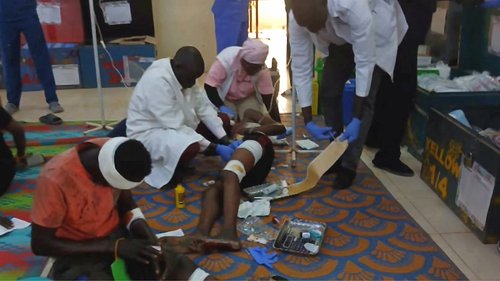
As the conflict in Sudan continues, military forces have made significant advancements in the capital, Khartoum, marking a pivotal moment in the two-year civil war. A New York Times team became the first Western journalists to report from central Khartoum since the conflict escalated, witnessing firsthand the devastation and loss suffered by the city and its inhabitants.On a recent Sunday, soldiers were observed preparing for missions at the battle-damaged presidential palace, which has changed hands once again, following fierce fighting that resulted in numerous casualties. With the military's capture of this critical location, along with other major sites including the Central Bank and the national intelligence headquarters, the tide appears to be shifting in their favor.The military's resurgence has sparked renewed hopes among its ranks, yet the specter of conflict remains unresolved. Special Forces officer Mohamed Ibrahim expressed determination against the rival paramilitary Rapid Support Forces (R.S.F.), once allies but now adversaries, stating, "We will never leave our country to the mercenaries."As the situation unfolds, Khartoum stands as a stark symbol of the humanitarian crisis facing Sudan, where efforts to regain control continue amid an environment filled with strife and uncertainty over the future. The international community watches closely as this complex narrative of power struggles and civilian suffering continues to unfold.