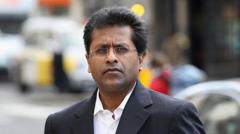
In a significant development, Vanuatu's Prime Minister Jotham Napat announced the cancellation of Lalit Modi's citizenship, highlighting that the former chief of the Indian Premier League (IPL) was seeking refuge from corruption allegations in India. Modi, who has been living in the UK since 2010 and is a fugitive wanted by Indian authorities, received Vanuatu's passport shortly before the revocation was announced.
The cancellation occurred just days after Indian officials confirmed Modi's citizenship in Vanuatu, a nation composed of over 80 islands in the Pacific. The allegations against him include rigging bids during auction processes while heading the IPL, which has grown into a lucrative enterprise since its inception in 2008.
Despite living in Britain, Modi has continuously denied the charges brought against him. His legal troubles have led to multiple failed extradition attempts by Indian authorities. India's foreign ministry recently disclosed that Modi had applied to surrender his Indian passport while residing in London.
Following the scrutiny surrounding Modi's request for citizenship, Prime Minister Napat stated that a Vanuatu passport must be obtained for legitimate reasons, firmly ruling out the intention of avoiding extradition as acceptable. He also noted that Interpol had previously declined to issue alert notices concerning Modi, which would have automatically disqualified his application due to insufficient evidence.
In response to the media hype regarding his charges, Modi claimed through social media that there are no active cases against him in India and criticized what he termed "fake news." His previous legacy in cricket has also been marred by a lifetime ban from the Board of Control for Cricket in India (BCCI) in 2013 due to his involvement in irregularities during the franchise auction process and unauthorized handling of broadcasting rights.
As Vanuatu's actions unfold, it marks a pivotal moment for Modi amid ongoing international scrutiny and legal pressures from his homeland.
The cancellation occurred just days after Indian officials confirmed Modi's citizenship in Vanuatu, a nation composed of over 80 islands in the Pacific. The allegations against him include rigging bids during auction processes while heading the IPL, which has grown into a lucrative enterprise since its inception in 2008.
Despite living in Britain, Modi has continuously denied the charges brought against him. His legal troubles have led to multiple failed extradition attempts by Indian authorities. India's foreign ministry recently disclosed that Modi had applied to surrender his Indian passport while residing in London.
Following the scrutiny surrounding Modi's request for citizenship, Prime Minister Napat stated that a Vanuatu passport must be obtained for legitimate reasons, firmly ruling out the intention of avoiding extradition as acceptable. He also noted that Interpol had previously declined to issue alert notices concerning Modi, which would have automatically disqualified his application due to insufficient evidence.
In response to the media hype regarding his charges, Modi claimed through social media that there are no active cases against him in India and criticized what he termed "fake news." His previous legacy in cricket has also been marred by a lifetime ban from the Board of Control for Cricket in India (BCCI) in 2013 due to his involvement in irregularities during the franchise auction process and unauthorized handling of broadcasting rights.
As Vanuatu's actions unfold, it marks a pivotal moment for Modi amid ongoing international scrutiny and legal pressures from his homeland.