
In brief
Europe’s aspirations for electric flying taxis encounter significant obstacles, notably funding shortages, as major companies in the sector, such as Volocopter and Lilium, face insolvency. While promising developments continue with firms like Vertical Aerospace, the future of these innovative transport solutions is uncertain.
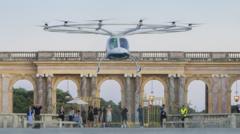
The vision of electric flying taxis in Europe has hit a significant snag as companies struggle with financial constraints and regulatory hurdles. One of the most anticipated innovations, Germany's Volocopter, had hoped to launch its electric two-seater aircraft, the VoloCity, during the Paris Olympics. However, instead of ferrying passengers across the city, the company was limited to conducting demonstration flights. Behind the scenes, Volocopter was in urgent talks to secure fresh investments to maintain operations after a failed attempt to secure €100m (£83m; $106m) from the government. Currently, eyes are on Geely, a Chinese company that is negotiating to acquire an 85% stake in Volocopter for a funding boost of $95m, which could lead to future manufacturing being moved to China. Volocopter is one of numerous companies worldwide developing electric vertical take-off and landing (EVTOL) aircraft, offering a helicopter's flexibility without the associated costs, noise, and emissions. Despite the promise, many investors are withdrawing due to the high costs of regulatory approvals and building manufacturing capabilities.Lilium, known for its innovative design featuring 30 tiltable electric jets, recently faced severe financial troubles. Although it had made positive strides, including orders for 780 jets and progressing with full-sized aircraft construction, Lilium entered insolvency proceedings after failing to secure essential loans backed by government guarantees. As it seeks restructuring options, the timeline for its aircraft production has become uncertain.Vertical Aerospace, based in the UK, has made notable advancements with its VX4 aircraft, utilizing eight propellers for lift. The company has ambitious plans to deliver 150 aircraft by the decade's end but has also faced setbacks, such as the departure of engineering partner Rolls Royce. Recently, it entered a new rescue arrangement with US-based lender Mudrick Capital for a cash infusion, although this will significantly dilute the founder’s stake.Amid the tumult, Airbus’s CityAirbus NextGen project emerges as a stable option, backed by solid engineering expertise and funding. With a range of 80 km and a configuration of eight propellers, the project is reportedly on track. Other global startups like Joby and Archer are also well-positioned to bring their designs to production, although market viability remains a concern. As enthusiasm in the flying taxi sector wanes, the challenge ahead lies in proving these aircraft can be commercially viable. With the hefty costs associated with pilots and the frequent need to replace batteries, investors may soon be questioning whether chasing the dreams of electric flying taxis is worth the potential rewards.

