In brief
The World Food Programme sounds urgent alarms over food shortages as the city of el-Fasher endures a prolonged siege. The conflict, now in its third year, has led to severe humanitarian ramifications, particularly affecting children.
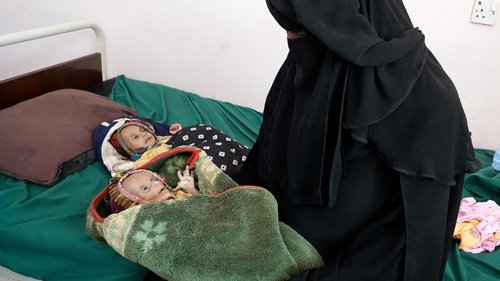
As Sudan's civil war drags into its third year, the World Food Programme (WFP) has issued a dire warning regarding the looming threat of starvation among families trapped in the besieged city of el-Fasher, located in the western Darfur region. For over a year, humanitarian efforts have been thwarted as road access for food delivery has been severely compromised, and paramilitary fighters from the Rapid Support Forces (RSF) have surrounded the city for nearly 16 months in their quest to capture it from the Sudanese army.Reports from local activists indicate that starvation-related deaths are already surfacing among the 300,000 residents still clinging to life in el-Fasher. Since conflict erupted in April 2023, subsequent power struggles between the army and the RSF have spiraled into one of the gravest humanitarian crises globally. The United Nations Children's Fund (UNICEF) has also sounded alarms about rampant malnutrition, with many children exhibiting severe health deterioration, described as being "reduced to skin and bones."The urgent WFP warning comes in the wake of pleas for immediate support from North Darfur Governor Al-Hafiz Bakhit, who claims that conditions in el-Fasher have become increasingly unbearable. Aligned with the military-led government, Bakhit is desperately trying to maintain control over this critical location. Recently, the RSF's attempts to seize el-Fasher have intensified, particularly following their expulsion from Khartoum, the capital.In camps for internally displaced individuals surrounding or near el-Fasher, UN statistics indicated that in early July, 38% of children under five were struggling with acute malnutrition. As food supplies dwindled, prices skyrocketed, forcing some residents to resort to eating animal fodder and food waste in a desperate bid to survive.Eric Perdison, WFP's regional director for eastern and southern Africa, stated, "Everyone in el-Fasher is facing a daily struggle to survive." He emphasized that residents' coping mechanisms have been exhausted following two years of relentless warfare. The WFP has food trucks ready to deliver aid, pending clearance from the RSF for a ceasefire to allow humanitarian deliveries.A simple truce has been advocated by the UN, particularly after a convoy was attacked en route to el-Fasher, with both the army and RSF trading accusations over the incident. While the head of the armed forces, Gen Abdel Fattah al-Burhan, agreed to a temporary ceasefire to facilitate aid, the RSF has reportedly labeled the initiative a deception aimed at resupplying their rivals within the city.The International Organization for Migration (IOM) noted last month that over a million individuals have fled el-Fasher since the conflict's inception, including those from neighboring Zamzam camp, recently taken over by the RSF. Accounts of harrowing escapes have emerged as the situation continues to exacerbate with increasing violence and shortages.While some areas in central Sudan have seen gradual aid improvements after RSF fighters were ousted, UNICEF's Sudan representative, Sheldon Yett, warns that stretched resources pose increasing threats to an entire generation of children. "We are on the verge of irreversible damage," he said, urging immediate and scalable action to respond to the growing humanitarian crisis.