In brief
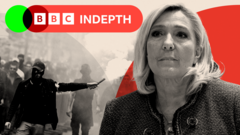
As her political future hangs in the balance, Le Pen's party may seek retribution, while potential successors emerge amidst a shifting political landscape.
The recent court ruling barring Marine Le Pen from standing in the 2027 presidential elections has ignited a furious response from France's far right. The National Rally (RN), led by Le Pen, reacted vehemently to the perceived injustice, with fervent calls to arms echoed over the airwaves. A prominent deputy urged the public to "be outraged" at the decision, yet the consequences for Le Pen's political fortunes remain uncertain. Le Pen and her supporters have characterized the verdict as a betrayal of France's core democratic values, declaring the country's institutions compromised. At a press conference, Le Pen drew a parallel between her situation and that of Alexei Navalny, the imprisoned Russian opposition figure, suggesting that the severity of the ruling reflects an imminent electoral threat to the political establishment. In light of this ruling, the atmosphere in French politics has become increasingly charged. Prime Minister François Bayrou expressed unease, fearing potential shifts in public sentiment. While some officials assert a decisive separation between justice and politics, early polling indicates mixed reactions from the electorate; only 31% deemed the ruling unjust, contrasting with the 37% who expressed initial support for Le Pen's presidential candidacy. Le Pen’s legal troubles stem from serious charges of fraud connected to the European Parliament, drawing on substantial evidence and implicating the party in systematic misconduct during her tenure. The court’s decision to impose a five-year ban has drawn criticism regarding its timing and implications for future elections. Many observers argue that had Le Pen shown contrition during the lengthy legal proceedings, the outcome might have been different. The current political climate is ripe with uncertainty as Le Pen's legal appeal proceeds at a measured pace, heightening speculation about the RN's strategies in parliament. Analysts ponder whether the party might leverage its 'victim' status to destabilize the coalition government and incite early parliamentary elections—an outcome that could place them in a position of increased prominence or lead to a political deadlock detrimental to President Macron.As the National Rally navigates this tumultuous period, the emergence of potential successors within the party cannot be overlooked. 29-year-old Jordan Bardella has emerged as a leading candidate, enjoying a growing base among the youth despite the challenges of converting social media popularity into electoral success. His appeal resonates, focusing on pressing issues such as living standards and immigration; however, the question remains whether his support can eclipse that of more experienced right-wing contenders.In this charged political environment, the RN has adopted a rhetoric familiar to populist movements worldwide, laying blame on sidelined elitist factions. With opinions diverging on the legitimacy of Le Pen's punishment, it remains to be seen whether the party can harness public sentiment into electoral gain or face backlash against perceived judicial overreach. Looking ahead, the uncertainty surrounding Marine Le Pen’s political journey poses critical questions: Will she emerge victorious, vindicated by outrage? Or will her legacy settle into that of enduring electoral near-misses? The landscape of French extremism faces a potential crossroads, dictated by the confluence of public opinion, judicial outcomes, and the complex fabric of political alliances. As French politics continues to evolve, the fate of the National Rally, Marine Le Pen, and the far-right movement hangs precariously in the balance amidst shifting public sentiments and institutional responses.