In brief
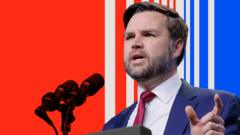
JD Vance, the U.S. Vice President, has emerged as a pivotal figure in shaping an "America First" foreign policy that prioritizes domestic over international concerns. His recent statements at the Munich Security Conference and a clash with Ukrainian President Volodymyr Zelensky illustrate a departure from traditional U.S. diplomacy, one that challenges longstanding alliances and promotes a shared national ethos that some describe as nativist.
In February, Vance sparked surprise and criticism during his first significant international address at the Munich Security Conference. While many expected a strong emphasis on the ongoing conflict in Ukraine, Vance notably turned the spotlight on immigration and free speech issues within Europe, framing them as threats to democracy. He admonished European leaders for catering to their citizens' fears rather than aligning with traditional American values, stating that if they cannot stand firm against their own voters, their relationship with America is futile. This forthright stance was a striking introduction to his international persona.Following this appearance, Vance found himself in embroiled discussions with Zelensky, where he accused the Ukrainian leader of lacking gratitude towards U.S. support. His comments drew ire and prompted European leaders to rally behind Zelensky, challenging the U.S.'s seemingly diminishing commitment to Ukraine.Vance's ideology reflects a core tenet of Trumpism, marrying conservative populist thought with a critique of both global elites and the traditional American political landscape. His approach appeals to disenchanted Americans who feel overlooked in favor of global interests. Regarded as a pragmatist, Vance argues that U.S. foreign policy must be rooted in the realities faced by American workers and should reassess priorities in favor of domestic stability.Yet Vance’s political journey reveals an evolution; once a "Never Trumper," he has shifted to a stance that melds his earlier viewpoints with a populist critique now common within his party. Many of his supporters view him as an active participant in the culture that has grown around the Trump presidency—especially his vigorous engagement in online discourse and right-wing media.Although he is married to the daughter of Indian immigrants, Vance's rhetoric often leans toward a nationalism that could alienate some traditional Republicans and moderates. Throughout his career, he has oscillated between blaming individual choices for societal issues and blaming the elites—proof of a complex worldview that aligns with the “America First” motto but also harbors echoing sentiments of exclusion regarding immigration.Most recently, Vance has positioned the conflict in Ukraine within a broader geopolitical strategy, advocating for a more Beijing-centric focus. While calling for the end of hostilities in Ukraine, he suggests that the U.S. should redirect its attention to the threat posed by China.The ramifications of Vance's foreign policy perspectives are significant; they challenge longstanding alliances while resonating with a base eager for change. As America navigates its role on the global stage, Vance's emerging ideology will undoubtedly continue to provoke debate both domestically and internationally. With reporting by Rachel Looker, Anthony Zurcher, and Lily Jamali in San Francisco.