In brief
As Spain prepares for the winter tourism season, a growing anti-tourism movement gains momentum, leading to protests in cities like San Sebastian and Seville. Citizens voice concerns over the impact of tourism on housing and local culture, pushing for significant changes.
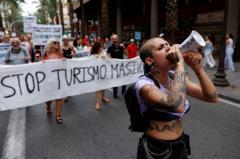
With the rise of winter tourism on the horizon, frustrations surrounding over-tourism in Spain are intensifying, leading to sustained protests as communities seek to voice their concerns. This Sunday, residents of San Sebastian will march under the slogan “We are in danger; degrow tourism!” Meanwhile, protests are also planned for November in Seville, indicating that this issue is far from resolved.As travel rebounds post-Covid, Spain is set to welcome over 90 million foreign visitors by year-end, with projections estimating 115 million arrivals by 2040. The Canary Islands witnessed significant protest activities recently, where discontent began as early as April. Actions have included hunger strikes and dramatic public displays, as locals express their distress over tourism developments that threaten their quality of life.Protesters argue that the tourism economy, while lucrative for some, is detrimental to local communities. Asier Basurto from the civic association Bizilagunekin states, “Tourism, which for a few is the golden goose, is an economic model that is choking the rest of us.” Issues raised in San Sebastian mirror those in popular tourist destinations like Barcelona and the Balearic Islands, highlighting a trend where local needs are overshadowed by tourist demands.Residents have seen shifts in public spaces aimed at catering to tourists while facing the rising cost of living due to the influx of short-term vacation rentals, which many blame for increasing rents in urban centers. With nearly half of renting families in Spain on the brink of poverty, the rise in rents linked to tourism has ignited further tensions.Despite the economic benefits tourism brings, accounting for about 13% of Spain’s GDP and over three million jobs, some politicians like David Morales, representing the People’s Party in the Canary Islands, emphasize the necessity for tourists to have a safe and uninterrupted experience. At the same time, the emergence of incidents where protesters have confronted tourists raises alarms about the growing sentiment of “tourism-phobia.”To address these concerns, local governments have begun implementing measures to manage tourist inflows better. In Barcelona, short-term tourist rentals will be banned by 2028; Palma de Mallorca has limited cruise ship dockings, and new restrictions on visitor numbers in Tenerife’s natural parks are in effect. Despite these efforts, Basurto promotes ongoing activism, cautioning that without substantial changes, the plight of local residents may worsen.As Spain grapples with the burgeoning tourism landscape amid its complicated relationship with locals, the pressing question remains: how can the country strike a balance between welcoming visitors and preserving the integrity of its communities?