In brief
Zelensky's recent engagement in Paris highlights his optimism for future support from European allies, amidst lingering uncertainties about U.S. reliability and Russia's demands for a ceasefire.
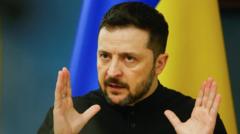
President Volodymyr Zelensky radiated optimism during my recent interview with him in Paris, breaking away from a meeting with French President Emmanuel Macron to discuss crucial matters with a panel of European journalists. The backdrop of our conversation featured the Eiffel Tower illuminated in a show of solidarity with Ukraine, where Macron had extended a warm welcome to Zelensky, presenting him with the image of friendship and support that Ukraine desperately needs at this moment.Zelensky was in Paris to engage with diplomats from 30 nations, united under the "coalition of the willing" initiative—led by UK Prime Minister Sir Keir Starmer and Macron—to work on comprehensive security guarantees for Ukraine in the event of a prolonged ceasefire. His reception marked a stark contrast to his recent encounter with U.S. President Donald Trump, who had sternly criticized Zelensky during his visit to Washington last month, even temporarily halting military support to Ukraine.After renewed efforts to mend ties with the Trump administration, Zelensky managed to restore U.S. military assistance following a strategic shift in rhetoric and a concession to an unconditional 30-day ceasefire proposal, effectively diffusing tensions. However, this experience has left Ukrainian officials with a lasting unease regarding U.S. commitment, highlighting a concern that the Americans may not always be reliable allies.During our discussion, Zelensky acknowledged the growing commitment from several European nations—led by the UK, France, and Germany—to enhance defense spending, which he optimistically sees as a potential shift that might position Europe closer to the United States in military preparedness within the next few years. He contrasted European discipline with the chaotic dynamics emerging from the Trump White House.I probed Zelensky about Russia's demands for a ceasefire, particularly concerning the proposal for reinstating a state-owned Russian bank to the SWIFT payment system, a move that would reintroduce Russia to the global market. The European Union has firmly stated that any lifting of sanctions against Russia hinges on its withdrawal from Ukrainian territory. Even Trump expressed skepticism about Russia's willingness to negotiate, yet the pressure remains on Zelensky to navigate these treacherous waters without losing U.S. support.Zelensky underlined the importance of American resilience against Russian conditions, stating, "If America is going to stand strong and not bend to the conditions of the Russians—we are defending our land.” Despite the pressure from U.S. policy shifts, he maintains a glimmer of hope about the future of U.S.-Ukrainian relations, while also expressing concerns about the narrative coming from Trump's administration.He critiqued the perception among certain Trump administration officials, like Steve Witkoff, suggesting their viewpoints align closely with Kremlin narratives, which Zelensky firmly dismisses. In concluding our conversation, he articulated a resolute determination to protect Ukraine, all while noting the gravity of the historical stakes involved.In the face of immense pressure due to ongoing conflict, Zelensky's buoyancy signifies a profound hope for the future. His ambition remains focused on ensuring safety for his children and the survival of his nation. As he quipped, "I am definitely younger than Putin," his enduring resolve illustrates a steadfast commitment to defending Ukraine and seeking enduring peace. While Trump may eye a quick resolution to the conflict, Zelensky emphasizes the importance of long-term commitments amidst the uncertainties of modern geopolitical dynamics.