In brief
Community activists equipped with sophisticated handheld devices discover alarming methane leaks in Washington D.C., emphasizing the health risks associated with this potent greenhouse gas. New satellite technologies, including Carbon Mapper's Tanager-1, aim to provide high-resolution data on methane emissions, while initiatives like the MARS system work to transform observed data into actionable solutions.
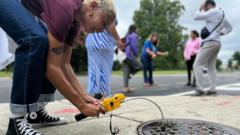
In and around Washington D.C., volunteers and activists are taking to the streets and homes to assess air quality and uncover hidden methane emissions. Armed with handheld, industry-grade monitors that resemble walkie-talkies, they are turning the invisible threat of methane into tangible data displayed on screens. Their recent findings reveal a troubling reality: in just 25 hours, they detected 13 outdoor methane leaks exceeding the lower explosive limit and unearthed similar leaks inside residences.Health implications loom large over their efforts. Methane and other gases, such as nitrogen oxide emitted by gas stoves, are associated with elevated asthma rates, especially in children. Djamila Bah, a healthcare worker and tenant leader for the community group Action in Montgomery, shared that one out of three children tested in affected homes has asthma. “It’s disheartening to realize people are living under such conditions they feel powerless to change,” Bah expressed.While methane poses serious health risks, it also plays a significant role as a greenhouse gas. Though it has a shorter atmospheric lifespan compared to carbon dioxide (CO2), its efficiency in trapping heat contributes to approximately one-quarter of the rise in global temperatures since the industrial era. The sources of methane emissions are diverse, with fossil fuels, waste, and agriculture at the forefront.Detecting methane can be a challenging endeavor. Handheld devices like those used by community researchers are one approach, while infrared cameras can visualize the gas, as methane absorbs infrared light. Monitoring technologies vary from ground-based sensors to aerial drone surveys, with different methods offering advantages and shortcomings. According to Andreea Calcan, a program management officer at the International Methane Emissions Observatory, no single solution exists, stating that balancing technology costs and analysis scale is vital.Interestingly, the past decade has seen a rise in accessible methane sensors, leading Calcan to advocate for a proactive approach to monitoring at all levels. Also, advancements in satellite technology pave the way for more comprehensive methane detection strategies. The Tanager-1 satellite, launched in August 2024 through a collaboration involving Carbon Mapper and NASA's Jet Propulsion Laboratory, aims to enhance emissions tracking from both super-emitters and smaller, widespread sources like agricultural operations.However, satellite observations still encounter drawbacks; for example, poor light conditions or environmental obstructions can hinder methane emissions detection. To mitigate these challenges, the Tanager-1 satellite has been designed for high resolution and rapid detection capabilities. This could distinguish emissions from specific sources, identifying clear accountability in an oil and gas field.As Carbon Mapper releases emissions data from Tanager-1 observations, it continues to build a constellation of satellites reliant on funding. Other satellites, including MethaneSAT—launched in 2024 by the Environmental Defense Fund—add to the growing arsenal of tools required to visualize methane emissions, leading to improved societal awareness of our methane footprint.Despite technological advancements, translating data into actionable responses remains complex. Even with robust systems like the Methane Alert and Response System (MARS) that identifies and notifies stakeholders of methane plumes, only 1% of generated alerts have prompted action. However, MARS has already triggered some responses, including repairs that eliminated emissions without needing official feedback.Optimistically, the team behind MARS believes that communication methods are consistently improving, and community activists, like those in the Washington D.C. area, can utilize their findings to combat misinformation surrounding air pollution. As Joelle Novey from Interfaith Power and Light stated, “Now that we know better, we can do better,” underscoring the critical need for decisive action in methane emission monitoring and reduction.