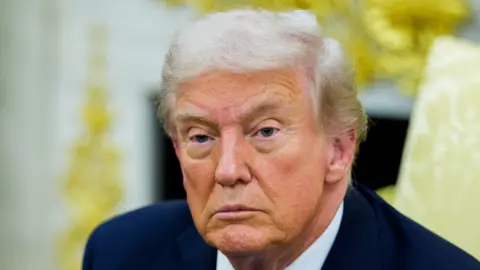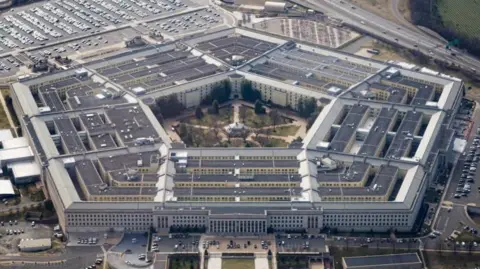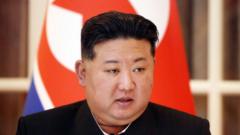
North Korea has responded critically to the United States' proposed "Golden Dome" missile defense system, which aims to counter advanced aerial threats such as ballistic and cruise missiles. The defense initiative, anticipated to be announced by President Trump before his term concludes, has provoked strong reactions from Pyongyang, which claims that the plan could transform outer space into a "potential nuclear war field." According to North Korean state media, the country’s foreign ministry denounced the proposal as a manifestation of "self-righteousness" and "arrogance," asserting that it reflects the US's commitment to "militarise outer space."
Experts suggest that North Korea perceives the Golden Dome as a significant threat, jeopardizing its nuclear deterrence strategy. Hong Min, a senior analyst at the Korea Institute for National Unification, noted that should the US successfully implement this missile defense system, North Korea might be compelled to enhance its own capabilities to evade or counter such defenses. This sentiment echoes North Korea's recent pronouncements of itself as a nuclear weapons state, a designation solidified by a law passed in 2022. The country has actively pursued the development of various missile technologies, claiming to successfully test an intermediate-range ballistic missile equipped with a hypersonic warhead.
In a broader regional context, North Korea's criticisms are mirrored by concerns from China. The Chinese foreign ministry recently voiced apprehensions regarding the implications of the Golden Dome, accusing the US of compromising global security in pursuit of unilateral advantages. Analysts argue that while modernizing the US defense systems may be vital, the endeavor is fraught with potential technical and political hurdles along with substantial financial implications, as initial estimates suggest costs could spiral to $500 billion over several decades.
In the chess game of international defense and diplomacy, the stakes are set high, as both North Korea and China view the Golden Dome initiative with growing alarm, unveiling delicate dynamics in US-Asia relations as the missile shield project evolves.
Experts suggest that North Korea perceives the Golden Dome as a significant threat, jeopardizing its nuclear deterrence strategy. Hong Min, a senior analyst at the Korea Institute for National Unification, noted that should the US successfully implement this missile defense system, North Korea might be compelled to enhance its own capabilities to evade or counter such defenses. This sentiment echoes North Korea's recent pronouncements of itself as a nuclear weapons state, a designation solidified by a law passed in 2022. The country has actively pursued the development of various missile technologies, claiming to successfully test an intermediate-range ballistic missile equipped with a hypersonic warhead.
In a broader regional context, North Korea's criticisms are mirrored by concerns from China. The Chinese foreign ministry recently voiced apprehensions regarding the implications of the Golden Dome, accusing the US of compromising global security in pursuit of unilateral advantages. Analysts argue that while modernizing the US defense systems may be vital, the endeavor is fraught with potential technical and political hurdles along with substantial financial implications, as initial estimates suggest costs could spiral to $500 billion over several decades.
In the chess game of international defense and diplomacy, the stakes are set high, as both North Korea and China view the Golden Dome initiative with growing alarm, unveiling delicate dynamics in US-Asia relations as the missile shield project evolves.