In brief
This year’s Budapest Pride took on a new significance as thousands of attendees made a bold statement against the Hungarian government's attempt to restrict their rights through new legislation.
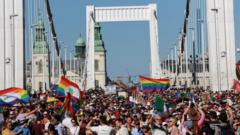
In a vibrant show of solidarity and resistance, Budapest Pride's annual march transformed into a powerful celebration of LGBT rights, attracting between 100,000 and 200,000 participants on a scorching Saturday. The streets around the famous Elisabeth Bridge became a colorful spectacle as individuals from diverse backgrounds danced and sang, marking a stark contrast to the mere 35,000 attendees in the previous year’s event.The surge in participation was directly motivated by Prime Minister Viktor Orban’s recent legislative efforts to curb freedoms, which many participants viewed as an affront to human rights. Demonstrators wielded banners with satirical messages aimed at Orban, articulating their dissent against what they perceive as a threatening governmental overreach. One popular slogan read, "In my history class, I learnt enough to recognize a dictatorship. You don’t need to illustrate it – Vik!" Gergely Karacsony, the mayor of Budapest, delivered an uplifting speech, celebrating the event as a triumph over authoritarianism and emphasizing the joyful nature of the march despite official attempts to ban it. "Today we look like we are peacefully and freely performing a big, fat show to a puffed-up and hateful power," Karacsony proclaimed, rallying the crowd to continue the fight for their rights. The opposition to the government's agenda was not limited to local figures; Finnish MEP Li Andersson highlighted the event as a stand for fundamental rights, asserting that the struggle extends beyond just the LGBT community. She condemned the recent law linking homosexuality to child protection as a deceptive political tactic.Despite the police's initial justification for a ban on the march based on concerns for children, they maintained a limited presence during the event, a marked shift from prior expectations of a heavy crackdown. Earlier in the day, Orban had attended a graduation ceremony for new police recruits, where his remarks underscored a contrasting political narrative focused on order and traditional family values.The government-controlled media was quick to criticize the event, framing it as a chaotic spectacle rather than a genuine expression of freedom. Amidst this heated landscape, the future ramifications of the event remain uncertain as political analysts predict legal battles ahead. While Pride festivities filled the streets, a few blocks away, Orban's supporters sought to reclaim the term “pride” through traditional imagery, capturing the broader cultural battle playing out in Hungary. The outcome of Budapest Pride could very well hinge on forthcoming court decisions regarding the legality of the government’s restrictions moving forward, raising questions about the ongoing struggles for human rights in Hungary.