
In brief
At a recent summit in Samoa, Commonwealth leaders advocated for meaningful discussions on reparations for the transatlantic slave trade, amidst the UK government's insistence to avoid the topic.
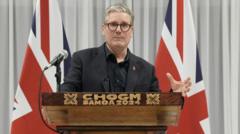
Commonwealth leaders have taken a significant step towards discussing reparations for the slave trade, asserting that "the time has come" for such conversations. Despite UK Prime Minister Sir Keir Starmer's desire to keep this sensitive subject off the agenda at the two-day summit in Samoa, a joint document signed by 56 heads of government acknowledges the necessity for a "meaningful, truthful, and respectful conversation" regarding reparations for the "abhorrent" legacy of the transatlantic slave trade.Prime Minister Starmer clarified that financial reparations were not the focus of discussions, reiterating the UK's firm stance against repaying any reparations. As calls for both an official apology and reparations grow from Commonwealth nations, the UK following these sentiments remains firm on its policy. Starmer emphasized that despite reparations being a topic of interest, it comprises a small segment of a broader agenda focusing on resilience and climate action.Prior to the summit, information leaked suggested that reparations would not be addressed, raising concerns among leaders advocating for overdue conversations regarding historical injustices. Diplomats highlighted the importance of these dialogues, even if immediate action isn't anticipated. The summit's joint statement allowed nations pushing for reparations to indicate that discussions continue, while the UK maintains its existing position.Looking ahead, Starmer hinted that there may be further conversations concerning reparatory justice during the upcoming UK-Caribbean forum scheduled for next March in London. During the forum, leaders are expected to draft a comprehensive report addressing reparations, as outlined by Frederick Mitchell, the Bahamas' foreign minister. He expressed optimism that financial reparations would eventually be acknowledged and enacted.The issue of reparatory justice is anticipated to gain more focus in future Commonwealth discussions, particularly with predictions indicating it will be central at the next summit. Previous evaluations suggested the UK could owe upwards of £18tn in reparations for enslaving peoples across Caribbean nations. While concepts of reparations may include financial compensation, discussions might also explore potential apologies or educational programs.Newly appointed Commonwealth Secretary-General Shirley Ayorkor Botchwey also supports reparations, highlighting the imperative need for this necessary dialogue as a step towards justice and understanding of historical grievances. As Commonwealth nations tread this intricate path, the momentum for reparations remains a contentious yet vital aspect of their ongoing discussions.


