
In brief
Amid the echoes of past struggles, the people of Homs find renewed hope as they confront both old wounds and the promise of a brighter future.
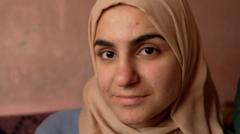
As the streets of Homs fill with celebratory energy following what many believe to be a turning point in Syria’s long-standing conflict, the city, once dubbed the "capital of the revolution," sees both old scars and new beginnings. Baraa, now a 20-year-old university student, reflects on her difficult past that started nearly a decade ago when she fled the Old City of Homs amid a brutal siege marked by starvation and despair. "I often wonder how we survived this nightmare," she says, as she reminisces about a childhood filled with trauma yet anchored in dreams for the future. Her father, Farhan, proud of his three daughters raised during these harsh times, underscores the family's collective sentiment: “We wanted peace, not war.” Baraa’s story is one of survival. During the siege, the tortured existence forced upon the citizens of Homs led to unimaginable hardships. "Instead of learning to read and write, I learned about weapons,” she says starkly. This revelation stands as a testament to the destructive toll the conflict has had on the youth of Syria.As parts of Homs begin to heal, Baraa expresses her aspirations with newfound hope: “I want to finish university, pursue a master’s, and improve my English.” Her words embody a spirit that looks beyond the past, pondering a future filled with possibilities. In contrast, the scars from the war still persist for many. Dr. Hayan al-Abrash, who once provided medical care in an underground hospital, visits the ruins of the place where he served countless wounded civilians. Despite the joy rising within many Syrians, he acknowledges the complexities of emotional recovery: “It’s not a time for revenge, but we don't forgive. Those responsible must face justice.” Others in the community echo this sentiment, stating that rebuilding must be a collective effort across faiths, showing resilience and solidarity. Father Tony, a priest in Homs, captures this beautifully: “In this grotto... there is also the story of this Muslim family.” As Baraa and her family navigate their way through the remnants of destruction while grasping for hope, they encapsulate a broader narrative of Syria—a journey from despair to the longing for a peaceful, shared future. In an environment still scarred by turmoil, there lies an undeniable energy for rebirth, healing, and growth.
