In brief
The move, designed to enhance free expression, may lead to increased hate speech and misinformation, threatening the safety of vulnerable groups.
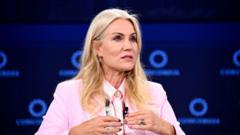
Helle Thorning-Schmidt, who serves as the co-chair of Meta's oversight board and is a former Prime Minister of Denmark, has voiced her deep concerns regarding Meta's recent decision to remove third-party fact-checkers from Facebook and Instagram. During an interview with BBC Radio 4's Today program, she emphasized the significant risks this change poses, particularly for minority groups like the LGBTQ+ community as well as individuals affected by gender and trans rights.Thorning-Schmidt highlighted that while she acknowledges some positive aspects of the shift—such as empowering users to evaluate the accuracy of posts through a community-driven approach akin to X's "community notes"—there are "huge problems" associated with this strategy. She warned of the potential for hate speech to incite harm in the physical world, urging vigilance in monitoring these developments.In a video accompanying Meta's announcement, CEO Mark Zuckerberg framed the move as a return to prioritizing free expression, arguing that previous third-party fact-checkers were politically biased and contributing to unwarranted censorship. Nonetheless, this decision has raised concerns about the future credibility of the oversight board, which has been financially supported by Meta. Thorning-Schmidt stressed that the need for oversight becomes increasingly critical in light of these changes. She urged for transparent discussions between the oversight board and Meta regarding content moderation. Additionally, she noted Metas' intent to refine its fact-checking processes following rare instances of excessive moderation that resulted in users being unjustly penalized.Critics have speculated about the timing of the announcement, suggesting it may be an attempt by Zuckerberg to align with the incoming Trump administration and regain influence in the tech landscape, particularly in light of Elon Musk's recent moves on competing platforms.While opposition voices decried the change as a regression for efforts against online hate speech, supporters celebrated it as a step towards promoting free speech. Fire, a US free speech organization, praised Meta's intent to allow a broader spectrum of political discourse and reduce arbitrary content moderation practices.Following the announcement, Trump expressed approval of Zuckerberg's decision, suggesting that Meta has made progress. When prompted about whether Zuckerberg was responding to previous threats, Trump insinuated that it was likely.Zuckerberg acknowledged the inherent risks of his strategy, admitting the company may mismanage the removal of harmful content but aims to prevent the inadvertent suppression of legitimate posts. Analysts, such as Jasmine Enberg from Insider Intelligence, pointed out that although Meta's vast size provides some insulation against drastic changes—like those seen with X—brand safety remains a critical concern for advertisers who may reconsider their budgets in light of declining engagement. As Meta navigates this new path, stakeholders are left to ponder the implications of reduced content moderation and its potential effects on the digital landscape.