
In brief
Experts are scrutinizing the presence of a concrete wall close to the runway that obstructed a Jeju Air flight, exacerbating a catastrophic situation that resulted in 179 fatalities.
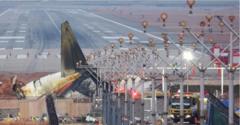
A recent disaster at Muan International Airport in South Korea, which claimed the lives of 179 passengers and crew, has prompted aviation experts to question the safety and necessity of a concrete wall located approximately 250 meters (820 feet) from the end of the runway. Footage taken during the incident shows that the plane veered off the runway before colliding with this wall, leading to a fiery explosion.According to air safety analyst David Learmount, the plane might have avoided a tragic end had this "obstruction" not existed. He stated, "The aircraft would have come to rest with most—possibly all—those on board still alive." Initial reports indicate that the pilot had aborted the initial landing due to a bird strike and attempted to land from an alternate direction. However, the aircraft touched down far down the 2,800-meter runway, seemingly without deploying any landing gear.Learmount described the landing maneuver as an exceptional attempt, asserting that the damage sustained during the slide along the runway was not fundamentally responsible for the fatalities. "The high casualties were a result of the aircraft striking a very rigid barrier just beyond the runway threshold," he explained.Christian Beckert, a Lufthansa pilot from Munich, remarked on the unusual nature of the concrete structure, emphasizing that most runways are not accompanied by such hard barriers. Reports from South Korea's Yonhap News Agency elucidated that the wall houses a navigation system used to assist aircraft landings, known as a localizer. The 4-meter-high wall was constructed to keep the equipment level with the runway, ensuring functionality.While officials from South Korea's transport ministry confirm that similar installations exist at various airports, they are reconsidering whether lighter, more impact-resistant materials should be employed for such structures. Chris Kingswood, a seasoned pilot with nearly five decades of experience, noted that aviation regulations mandate that obstacles within close proximity to runways be frangible, designed to break upon impact. He expressed surprise at the presence of such a solid structure, especially considering the aircraft's high-speed landing parameters.Aviation analyst Sally Gethin emphasized the need for clarity regarding the pilots' awareness of the wall's presence, particularly due to the unconventional landing approach. "Were the pilots informed of this hard boundary?" she queried. "The investigation of the flight data recorders should uncover this critical detail, adding to the multitude of questions surrounding this tragic incident."
