
In brief
The iconic Air Force One, the presidential jet, may soon see a transformation as a generous Qatari proposal sparks debates on both safety and luxury.
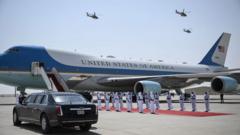
The article text:Most journalists traveling with the US president have limited access to the luxurious interior of Air Force One, the aircraft designated for presidential use. The press is typically seated at the back of the plane, while the presidential suite resides at the front, secured behind layers of Secret Service agents guarding the cabin next door. During Donald Trump's recent Middle East trip, which generated significant buzz around the potential future of Air Force One, some journalists were left in the back while Fox News anchor Sean Hannity conducted an in-flight interview from prime seating. The trip, described as an "endurance test" by Trump, spanned three countries in a mere three nights, setting the pace for both staff and the traveling press pool. While the press cabin may seem cramped, it is equipped with comfortable seating that parallels first-class experience on commercial flights, including a bathroom and access to snacks, notably the exclusive Air Force One-branded M&Ms featuring the president's signature. The cabin hosts two television screens that typically showcase the president's favored news channels or even live sporting events on occasion.A major topic of discussion revolves around Qatar's intriguing offer to gift a new "palace in the sky" plane worth $400 million, which could lead to substantial changes within Air Force One if accepted. Notably, while "Air Force One" refers to any Air Force aircraft with the president onboard, the iconic models most recognized today are the 747-200B planes, featuring a striking color scheme selected by former First Lady Jackie Kennedy in 1962. Since their introduction in 1990, these 747s have served two US presidents and have increasingly shown signs of wear, prompting dissatisfaction from the current administration. President Trump, the only president to have owned a personal aircraft before office, has publicly lamented the aging jets, calling attention to their obsolescence during recent briefings. An upgrade has long been anticipated – the new 747s, designed with Trump’s preferred colors, were initially set to launch by 2021, although delays and rising costs have postponed their arrival, pushing potential deliveries beyond 2029. The suggestion of a foreign aircraft gift from Qatar, offered as a swift alternative, brings legal and ethical discussions to the fore, alongside concerns regarding technical readiness for presidential security. Transforming a foreign 747 into a secure presidential jet would necessitate extensive modifications, including advanced communication and security systems that the current aircraft possess, making the retrofitting process complex, and potentially extending a timeline to 2030 or longer, as experts warn. As the Air Force considers retiring the ongoing fleet of 747s, they will be letting go of an emblematic aircraft type that has been part of American history for decades. The planes have facilitated the travel of multiple presidents over significant historical moments, including addresses and crisis management, giving way to formidable narratives tied to the jets. Although aging, Air Force One remains an enduring symbol of American presidential authority, reinforcing its role as a flying command post adapted for military rather than luxury pursuits. In the ongoing discourse about its future, the quest for a feasible approach continues, balancing safety with the demands of modern presidency.

