
In brief
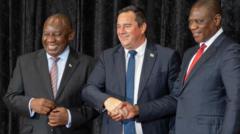
As tensions escalate between South Africa’s ruling ANC and the opposition DA over budgetary disagreements, the fate of the coalition government hangs in the balance, with potential implications for the nation's economic stability.
In South Africa, the coalition government established less than a year ago is facing significant strain as disagreements between the African National Congress (ANC) and the Democratic Alliance (DA) come to light. The latest clash arose from a pivotal vote on the national budget, during which the DA opposed the fiscal framework, condemning proposed increases in VAT and calling for cuts in government spending. Meanwhile, the ANC maintained its stance against what they described as the DA's push for an "austerity budget." In a display of political maneuvering, the ANC managed to secure support from various smaller parties, pushing the fiscal framework through parliament by a vote of 194 to 182. In response, the DA has initiated legal proceedings to contest the vote, labeling it "procedurally flawed," and is set to convene to deliberate its future in what many refer to as the government of national unity (GNU). Political analyst Professor William Gumede from Wits University notes the DA is at a crossroads, weighing whether to continue in the coalition or wait for the court's decision. The coalition emerged after the ANC lost its parliamentary majority for the first time since 1994, leading to calls from South Africa's business community for a partnership to stabilize the economy. DA spokesperson Willie Aucamp criticized the ANC for a "serious infraction," suggesting the ANC had "crossed a line." Further complicating matters, DA federal chair Helen Zille expressed that the party is reviewing all options, emphasizing the need for a redefined balance of power within the coalition. Conversely, the ANC pushes back, with its parliamentary chief whip, Mdumiseni Ntuli, calling the DA's actions a "complete betrayal." Despite the tensions, other parties involved in the coalition seem committed to maintaining it, indicating that the partnership could potentially endure the current crisis. Voting alongside the DA were other notable opposition parties, including supporters of former President Jacob Zuma and the Economic Freedom Fighters, forming an unexpected alignment against an increase in VAT, which both factions believe disproportionately impacts the poor. President Cyril Ramaphosa's administration argues that the VAT hike is essential for funding critical services. However, the partnership with the Inkatha Freedom Party (IFP) to support the budget reveals shifting alliances, as previous attempts to prevent the ANC's rise falter. The escalating dispute showcases deep ideological divides, with the DA concurrently challenging three other legislative measures, including land expropriation legislation, further complicating coalition dynamics. Adding to the pressure, the recent tariffs imposed by the Trump administration on South African exports have heighted concerns regarding economic stability, forcing both ruling and opposition parties to consider the consequences of their conflict. Ramaphosa’s office has condemned the tariffs, asserting they obstruct trade and hurt the economy amid rising unemployment. Many citizens hope that urgency leads the coalition parties to cooperate, as the prospect of an economic downturn looms large in South Africa, which is grappling with an official unemployment rate exceeding 30%.



