
In brief
In Sudan's relentless war, children like Mahmoud symbolize resilience amid adversity, yet the country remains in dire need of humanitarian support.
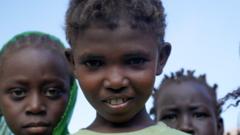
Mahmoud, a spirited 13-year-old orphan, embodies the challenges faced by Sudanese children amid the country’s severe humanitarian crisis. Stripped of their homes and often separated from their families, Mahmoud is one of the nearly five million children who have fled due to escalating violence amidst the conflict between the Sudanese army and the paramilitary Rapid Support Forces (RSF). His story is a testament to the invisible crisis that has gripped Sudan, highlighting a situation where more children are fleeing their homes than in any other region worldwide.The United Nations' new humanitarian chief, Tom Fletcher, recently underscored the severity of Sudan’s plight, stating that over 25 million Sudanese—more than half the population—urgently require aid. His first field mission focused on the country to shed light on its dire circumstances, where famine has been officially declared in select regions, pushing many to the brink of starvation. "This crisis is not invisible to the UN,” Fletcher asserted, standing alongside local humanitarian workers who have also been displaced by the ongoing violence.Mahmoud is residing at a makeshift orphanage in Kassala, adapted from a dilapidated school, which houses nearly 100 children. Initially safe in Khartoum, these children were forced to flee when fighting erupted between military factions in April 2023, leading them into a chaotic cycle of violence and displacement. When asked about his dreams, Mahmoud boldly expressed a desire to become a state governor to help rebuild his community.As the conflict devastates lives, finding food has become a monumental daily challenge for many. Despite the adversity, recent announcements from army chief Gen Abdel Fattah al-Burhan have opened new avenues for humanitarian assistance, allowing the UN’s World Food Programme (WFP) to deliver aid to some of the worst-hit areas, including the desperate Zamzam camp in Darfur, where famine conditions have been reported.While this progress is encouraging, there are ongoing criticisms of the UN's restricted operations due to the complex political landscape in Sudan, where access to aid is tightly controlled. Fletcher has stressed the importance of negotiation with local authorities to facilitate deliveries, hoping that cooperation can prevail over the existing hostilities.Sexual violence is another horrendous reality during the conflict, described by the UN as an epidemic, with humanitarian efforts also focused on addressing these issues while empowering local women, who are vital to the community’s resilience. Amidst this turmoil, individuals like Nour Hussein al-Sewaty, known as Mama Nour, continue to strive to protect and provide for vulnerable populations, including abused women and orphaned children."We need help...we want to feel there are still people in the world who care about us," Mama Nour expressed, capturing the anguished yet determined spirit of those affected in Sudan. As the world watches, many fear that without urgent global action, countless more will face the overwhelming consequences of this ongoing tragedy.


