
In brief
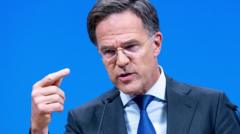
In a bid to gain favor with former President Trump and strengthen NATO's military capabilities, Secretary General Mark Rutte has proposed an ambitious 5% defense spending target for member nations. Increasing public defense spending significantly, this proposal is met with skepticism by several European nations.
The article text follows:In a strategic move ahead of the upcoming NATO summit, NATO Secretary General Mark Rutte is determined to present a plan that aligns closely with Donald Trump's call for increased defense spending. At a press conference in Brussels, Rutte advocated for NATO members to allocate 5% of their national GDP toward defense spending. This proposal is particularly significant considering that Trump has previously criticized European allies for not contributing sufficiently to the alliance and relying on American taxpayer resources.Rutte's vision, which far exceeds NATO's current goal of 2% of GDP, suggests a drastic shift in how European nations approach defense spending. Many are questioning whether this change is primarily aimed at deterring Russian aggression or whether it is also a strategy to appease Trump amid his transactional view of international relations.To make the proposal somewhat more palatable, Rutte mentioned a compromise plan that would require member nations to increase their core defense expenditure to 3.5% of GDP, with the remaining 1.5% potentially classified as “defense-related expenditure.” This somewhat vague classification could encompass a variety of costs, including those related to military infrastructure and defense industry needs, thus allowing nations to meet the target more flexibly.Rutte also indicated that the U.S. would adhere to the proposed spending increase, although for Washington, maintaining its current spending of around 3.4% would be less challenging. However, the true issue lies not merely in the commitment to the proposal but rather in its effective implementation over time. Although no strict timeline is set, the expectation is that member states would need about a decade to meet the new target.Adding to the complexity of this increase, Mr. Rutte was challenged on whether he could ensure that countries follow through with their commitments. In response, he proclaimed he had a "cunning plan" to hold leaders accountable, which would enforce annual plans to display incremental progress toward the new benchmarks. This approach aims to prevent a last-minute surge in defense spending, which he compared to a “hockey stick” effect on a graph.Next week, Rutte is scheduled to visit the UK for talks with Prime Minister Sir Keir Starmer, where the proposed spending limits will undoubtedly be a key topic. Interestingly, the UK’s current defense plan is to raise spending to only 2.5% of GDP by 2027, with an aspiration to approach 3% in the future.U.S. Defense Secretary Pete Hegseth, who attended the NATO defense ministers' meeting alongside Rutte, indicated that nations such as France, Germany, several Baltic and Nordic countries, Poland, Greece, and Hungary already show momentum toward committing to the 5% pledge. While Hegseth refrained from naming nations lagging behind, he expresses confidence that the UK will fulfill its obligations. "We think everyone is going to get there, we really do. It's important they do. It's important that the UK gets there," he affirmed.
