
In brief
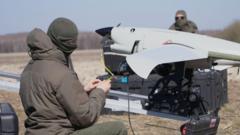
The Raybird, a long-range drone developed by Ukraine, continues test flights as uncertainty surrounds a recently agreed ceasefire. Ukrainian officials express skepticism over Russia's adherence to the agreements, emphasizing ongoing aerial threats while enhancing drone capabilities.
At a discreet test facility, Ukrainian engineers diligently work on their latest creation, the Raybird, a long-range drone capable of flying more than 1,000 kilometers (620 miles) to carry out precision strikes. This mini airplane, designed for stealth and efficiency, represents a significant leap in Ukraine's military technology amidst an ongoing conflict with Russia.Following recent negotiations in Saudi Arabia, both Ukraine and Russia have tentatively agreed to a partial ceasefire focused on halting attacks on energy infrastructure. Ukrainian President Volodymyr Zelensky has affirmed the commitment to these accords, yet doubts linger among military experts, particularly regarding Russia's trustworthiness. Oleksiy, from Skyeton—the Raybird's manufacturer—remarked that historical behavior of Russia suggests a continued threat despite verbal agreements.Ukraine's aggressive drone campaign has targeted critical oil facilities deep within Russian territory, reportedly accounting for over 30 strikes this year alone. These missions have significantly hampered Russia’s oil production capabilities, leading to a 10% decline in refining capacity. The recent extension of a ban on petroleum exports further indicates Moscow’s economic strain from the ongoing conflict.In response to these challenges, Ukrainian engineers have designed new drones boasting an impressive range of 3,000 kilometers (1,860 miles), capable of threatening cities as distant as Siberia. Additionally, Kyiv claims advancements in missile technology, showcasing upgraded cruise missiles and domestically produced ballistic weapons in recent operations. These developments highlight Ukraine's strategic emphasis on expanding its military arsenal while also addressing vulnerabilities created by Russian attacks on its energy infrastructure.Firefights and aerial assaults have left significant damage to Ukraine's energy infrastructure, reducing power generation capacity drastically over the past year. Russian drones have repeatedly struck thermal power plants and gas facilities, aiming to weaken Ukraine’s energy resources. Experts warn that prolonged attacks will complicate efforts to replenish gas storage facilities, heightening fears of energy shortages in the coming winter.As the Raybird concludes a successful test flight, Oleksiy acknowledges the necessity of continued advancement in weaponry. He asserts that a ceasefire could provide an opportunity for Russia to regroup, underscoring the imperative for Ukraine to remain vigilant and prepared for any eventuality. With drone warfare emerging as a pivotal frontline in this conflict, the stakes remain high as engineers like Oleksiy push forward with innovation in an increasingly uncertain world.


