
In brief
The Danish government is grappling with the fallout from President Donald Trump's threats to acquire Greenland, with leaders striving to maintain a conciliatory tone while firmly asserting that the territory's future should be determined by its people. High-level meetings have taken place to address the unexpected diplomatic challenge, as local leaders and the business sector prepare for potential repercussions on trade relations.
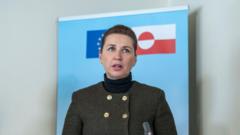
Denmark's political climate is currently fraught with tension following President Donald Trump's provocative threats to acquire Greenland and impose steep tariffs on Denmark if reminded of this issue. Danish Prime Minister Mette Frederiksen has taken the lead in formulating the national stance, reiterating that any discourse on Greenland's future must be decided by its people. Reflecting the nation’s somber atmosphere, Foreign Minister Lars Løkke Rasmussen affirmed their serious consideration of the situation, despite stressing a desire to avoid escalating conflicts with the US.The continuous talks among Danish leaders indicate the gravity of the moment and the unexpected nature of Trump’s remarks. Greenland's Premier Mute Egede visited Copenhagen to discuss this matter further, prompting an extraordinary meeting among party leaders in parliament, with Frederiksen advocating for a diplomatic approach. While acknowledging the United States' interest in Arctic matters, she underscored that Greenland's destiny should be guided solely by its inhabitants.Frederiksen's measured rhetoric demonstrates a dual strategy: a careful avoidance of confrontation and an emphasis on the autonomy of Greenland, an area with rising nationalist sentiments. The issue is fraught—Denmark's historical complexities regarding Greenland only add layers to the current discourse, considering recent apologies for past injustices.Opposition voices, like that of MP Rasmus Jarlov, criticized Frederiksen for not robustly denouncing Trump’s claims, expressing concern over the pressures this scenario could impose on Greenland's residents. The dialogue surrounding independence has intensified, with discussions hinting at the potential for a future referendum, even as dependency on Denmark remains significant.Experts and commentators are attentively watching Greenland's political evolution, highlighting the need for the territory to chart its future, yet cautioning against abandoning existing ties due to the economies' reliance on Danish support. The stakes extend beyond bilateral relations, with EU officials openly warning against any violation of internationally recognized borders, underscoring global implications of the U.S. stance.As the threats of tariffs linger and preparations for the potential fallout unfold, Denmark's business community is bracing for a challenging period while hoping for a softer focus from the incoming Trump administration on these particular grievances. The cautionary stance taken by Danish leaders underscores the intricate balance of diplomacy required to navigate these turbulent waters.


