In brief
As Donald Trump gears up for a new presidency, experts anticipate various shifts in global trade and economic stability, particularly through potential tariff increases that could influence inflation and growth rates worldwide.
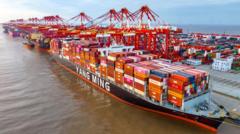
As 2025 approaches, the world economy brims with complexities largely due to the anticipated return of Donald Trump to the presidency, colloquially dubbed 'Trump 2.0.' With growth projections set at 3.2% by the International Monetary Fund, the economic landscape may witness heightened tensions, especially regarding tariffs and trade agreements.Recently, American borrowers received good news with a series of interest rate cuts, a welcome development amid ongoing battles against elevated inflation rates. The Federal Reserve's chairman, Jerome Powell, indicated a cautious monetary policy moving forward, prompting stock market declines despite initial positive sentiment.The lingering impacts of the COVID-19 pandemic and geopolitical events, like the Ukraine conflict, have notably raised prices globally, with inflation statistics reflecting pressures in the U.S., eurozone, and UK—highlighted by rates of 2.7%, 2.2%, and 2.6% respectively. This persistent inflation underscores the challenges that monetary authorities face as they target an optimal inflation rate of 2%.The biggest concern for global growth remains uncertainty. Luis Oganes from JP Morgan notes that potential new tariffs for trading partners such as China, Canada, and Mexico could signal a retreat into isolationism, a policy stance reminiscent of Trump’s previous administration. Such measures, while momentarily benefiting U.S. manufacturing, could severely disrupt economies dependent on trade with the U.S.Maurice Obstfeld, former chief economist at the International Monetary Fund, warns that tariffs could trigger widespread issues, particularly in the automotive industry, which relies heavily on an integrated supply chain across North America. Disruption in this sector may escalate costs, diminish product demand, and erode corporate profits, ultimately curbing investment.Despite existing tariffs on U.S.-China trade, the fear of further escalations poses a significant challenge for China to maintain robust demand for its goods. President Xi Jinping acknowledged external uncertainties complicating China's economic recovery, despite recent growth projections being adjusted upward by the World Bank.Trade tensions and protective tariffs could particularly undermine China's manufacturing sector, which is critical to its economic stability. As some companies contemplate relocating production due to these geopolitical pressures, observers note that complete relocation from China remains a formidable task given the country's historical manufacturing strength.The electric vehicle market stands out as a focal point of international trade disputes, with tariffs already impacting the industry. Recent warnings from the European Central Bank highlight that restrictive measures could stymie growth and exacerbate inflation, signaling potential turmoil for global economies still recovering from the pandemic.While the eurozone grapples with higher inflation rates and teetering growth prospects, particularly in Germany and France, pressures may trigger a crucial pivot in consumer spending and business investment to avert further economic decline.Amid rising costs influenced by various factors—including wages—global inflation remains a looming threat, with economic dynamism necessary to stimulate hiring and investment.As Donald Trump returns to power, analysts predict that newly announced economic policies, including tax measures and deregulation, will reshape the U.S. economy, potentially favoring American interests at the expense of international partners. Industry experts are keenly awaiting the specifics of Trump's plans and their far-reaching implications on the global market.