In brief
In Skopje on 26 February 2027, Macedonian Prime Minister Hristijan Mickoski and opposition leader Venko Filipce clashed over Serbia’s election outcome, with Mickoski congratulating the Student Movement while Filipce launched accusations of corruption and ties to Serbian leader Aleksandar Vučić. The exchange has been followed by further accusations and denials, underscoring regional political tensions.
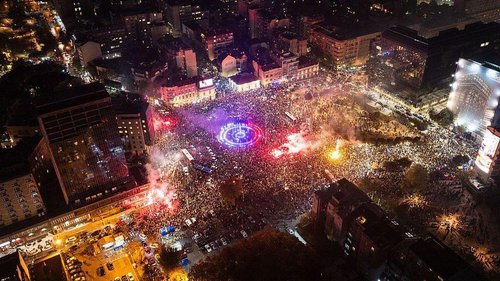
In Skopje on 26 February 2027, Macedonian Prime Minister Hristijan Mickoski and opposition leader Venko Filipce engaged in a heated verbal exchange after Serbia’s October 25 parliamentary election saw the Student Movement, led by Ilija Srdanovic, win a majority. The confrontation unfolded during a press briefing that drew international attention to the fragile ties between the two neighboring states.
BTA reported that the Serbian election, which resulted in a new student‑movement government, prompted Mickoski to praise Vučić’s successor and to urge continued economic cooperation between North Macedonia and Serbia. Mickoski was quoted as saying he had among the first to congratulate Srdanovic, stressing the need to move onward “to increase economic cooperation.”
Opposition Leader Venko Filipce, head of the Social Democratic Union of Macedonia (SDSM), took the opportunity to accuse the ruling VMRO‑DPMNE‑led administration of being “tied to the structures of Aleksandar Vučić’s Serbian Progressive Party.” Filipce alleged that corruption schemes in the energy sector and “drug trafficking” linked the North Macedonian government to Vučić’s party.
During the same press conference, Filipce criticised the ruling party’s close ties with both Vučić and Hungarian Prime Minister Viktor Orban, claiming that these relationships “fuel, and have fuelled, our regime” and keep the country in a “media blackout.” He characterised the election congratulation as a celebration of a “wave of democracy in the region.”
Filipce said:
Some people say we are celebrating foreign elections. No, we are celebrating the arrival of the wave of democracy here in the region, because these business, political, and media ties with Aleksandar Vučić and, until recently, with Viktor Orban are the ties that fuel, and have fuelled, our regime. They keep us captive, in a media blackout, and under a highly corrupt regime.
In response, Mickoski described the remarks as “insults, fabrications, and lies” directed at him by the opposition party and dismissed Filipce’s accusations. He noted that he was accustomed to the kind of criticism that “falls on his shoulders” from those who oppose his administration.
VMRO‑DPMNE released a statement condemning the celebration of Vučić’s perceived defeat. The party’s statement called out the “celebration as a boastful display” and reminded the public that “just a few years ago, when Filipce and Zaev were in power, they glorified and honoured Vučić.”
In a 19‑hour‑ago update, the magazine Gazeta Express detailed further accusations by Filipce. He claimed that Mickoski “discredits and insults citizens, has criminal connections with Vučić, avoids concrete answers to the public, and sells out.” Filipce’s critique was part of an ongoing campaign against the Prime Minister’s alleged ties to Serbian and Hungarian political figures.
Meanwhile, 14 hours after the Skopje clash, Republika English reported that Mickoski rejected the opposition’s allegations as “lies and political fabrications.” Mickoski specifically referenced the State Audit Office’s report on a Hungarian loan, stating that the funds had “been used appropriately.” He added, “I will not comment on the press conferences held by your political party regarding the elections in Serbia and the attempts to link them to us—specifically the discussions about who served as a mentor to whom.”
These statements illustrate the deepening constitutional rift between the ruling party and the opposition, with each side framing the other as compromised by foreign influence. The exchange highlights a broader trend of political fragility that has been observed across the Balkan region for several years.
The North Macedonian public, still wary of external interference, has responded with skepticism to both sides’ charges. Political analysts note that the bilateral tensions could impact upcoming trade agreements and regional security protocols.
With the Serbian election outcome still debated, and with Macedonian leaders continuing to use the occasion to attack one another, the region remains in a state of heightened political uncertainty. The ongoing clash may influence future diplomatic relations and underscore the need for transparency in inter‑state cooperation.