
In brief
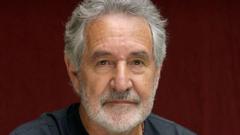
Breyten Breytenbach, the celebrated South African poet, novelist, and painter, has died peacefully in his sleep at the age of 85, with his wife Yolande at his side in Paris. His family shared a heartfelt statement, honoring him as "an immense artist, militant against apartheid, who fought for a better world until the end." Breytenbach's impactful life was marked by his vocal criticism of the apartheid regime, which had imprisoned him for his beliefs in the 1970s. Born in the Western Cape on 16 September 1939, he grew up in a family of five and was deeply influenced by the beauty and complexities of the Afrikaans language, even as he fought against its association with oppression.
His literary journey began as part of a group known as the Sestigers, who aimed to celebrate Afrikaans while opposing the racist policies of the government. Leaving South Africa in 1960 for self-imposed exile, he spent much of his life in Europe, where he continued to criticize the apartheid policies from afar. In 1975, during a secret visit to South Africa, he was arrested for attempting to assist anti-apartheid groups, leading to a seven-year prison sentence for terrorism. His harrowing experiences behind bars inspired his notable work, "The True Confessions of an Albino Terrorist." Following his release in 1982, thanks in part to intervention from French President François Mitterrand, he settled in France and continued his literary and artistic pursuits. Breytenbach was never shy to speak his mind; he later expressed disillusionment with South Africa's post-apartheid leadership, particularly the African National Congress, which he accused of corruption. Throughout his life, he published over 50 books, and his lyrical and political writings found resonance globally. He famously wrote an open letter in 2002 to former Israeli Prime Minister Ariel Sharon, arguing against the injustices faced by the Palestinian people. Breytenbach also gained recognition for his striking paintings that often captured themes of captivity and oppression. He was awarded France's highest cultural honor, being named a Knight of the Order of Arts and Letters. Breytenbach leaves behind his devoted wife, Yolande, their daughter Daphnée, and two grandsons, ensuring that his legacy as a literary titan and a champion for justice will endure.


