In brief
The Colorado Supreme Court reinforces that elephants, despite their cognitive abilities, lack personhood under U.S. law, leaving five elephants in a zoo instead of advancing to sanctuary living.
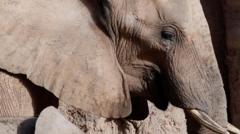
In a significant ruling, the Colorado Supreme Court has determined that five elephants currently housed at the Cheyenne Mountain Zoo are not considered "people" under the law, leading to the rejection of an animal rights group's petition to free them. The Nonhuman Rights Project (NRP) argued that the elephants—Missy, Kimba, Lucky, LouLou, and Jambo—were effectively imprisoned and sought to transfer them to a sanctuary. They initiated a habeas corpus claim, a legal avenue traditionally used for human cases of unlawful detention.Justice Maria Berkenkotter elaborated that the court's decision rested on the fundamental premise of personhood, stating emphatically that “an elephant is not a person.” The court, ruling 6-0, reiterated that the state's habeas corpus process is limited solely to individuals recognized as persons, regardless of the animals' cognitive and emotional capacities. While acknowledging the elephants' remarkable qualities, the court maintained its stance against applying the legal concept of personhood to nonhuman beings.The NRP contended that the elephants displayed significant emotional complexity and suffering, citing evidence of trauma and chronic stress attributed to their confinement. Conversely, Cheyenne Mountain Zoo defended its practices, asserting that the elephants are well-cared for and labeled the NRP's lawsuit as “frivolous.” In light of the Supreme Court's ruling, the zoo described the NRP’s legal efforts as a misuse of the judicial system, reflecting an attempt to manipulate public sentiment for fundraising purposes.The NRP, however, expressed discontent with the ruling, emphasizing the challenge of altering deep-rooted societal norms regarding animal rights. They indicated that setbacks are anticipated in their pursuit of justice for animals, likening their mission to other progressive movements that initially faced resistance. This ruling follows a precedent set by a prior case in New York, where the court similarly denied personhood status to an elephant named Happy.This decision reinforces the ongoing debate around the legal rights of animals, particularly as social and ethical considerations regarding their treatment continue to evolve. The case illustrates the challenges animal rights advocates face as they strive to impart personhood status to emotionally intelligent creatures like elephants.