
In brief
Trudeau emphasizes the potential impact of U.S. tariffs on Canadian exports and highlights the need for stronger economic ties between Canada and the United States amidst fears of potential annexation.
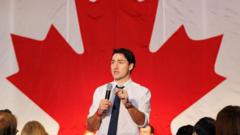
In a candid address to business leaders at the Canada-US Economic Summit in Toronto, Prime Minister Justin Trudeau has raised alarms about President Donald Trump's serious overtures regarding the potential annexation of Canada. During the closed-door discussions, Trudeau remarked that Trump appears to be serious about the idea of turning Canada into the "51st state," primarily aiming to gain access to vital Canadian minerals. "Mr. Trump seems to think that the easiest way to access our resources is to absorb our country. This is something we can't take lightly," he asserted.Trudeau's remarks come on the heels of Trump's threats, aiming to impose hefty 25% tariffs on all Canadian exports to the U.S., excluding energy, which is set to see a reduced tariff of 10%. Initially, the tariffs were scheduled to roll out earlier this week, but Trump offered a temporary reprieve of 30 days for Canada and Mexico, contingent upon enhanced border security measures. Trump's social media comments suggested that American statehood could be an alternative for Canada to dodge these tariffs, and he has labeled Trudeau as "Governor Trudeau."Back in December, Trump had initially broached the annexation idea jokingly during a dinner with Trudeau, but the Canadian government has now begun to perceive these comments with greater seriousness. An Ipsos poll from January indicated that a substantial majority of Canadians—80%—oppose any notion of Canada becoming a U.S. state, making it unlikely for them to support the idea in a referendum. The concerns surrounding Trump's threats have sparked anxiety across Canada, where a considerable portion of exports—approximately three-quarters—are directed to the U.S. The imposition of tariffs could significantly impact the Canadian economy and potentially lead to thousands of job losses. Some provincial governments have initiated "buy local" campaigns encouraging Canadians to prioritize domestic spending over U.S. goods, while others have canceled travel plans to protest the situation. In light of these challenges, officials are also looking into strengthening the Canada-U.S. relationship, particularly regarding energy and critical minerals. Jonathan Wilkinson, Canada's Energy Minister, has been actively engaging with American counterparts in Washington, emphasizing mutual collaboration as a beneficial opportunity for both nations. At the summit, Trudeau acknowledged the likelihood of confronting a more complex political dynamic with the U.S. and urged for resilient pathways to fortify Canada’s economy and trade relations moving forward.


