In brief
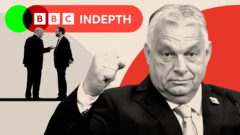
As Hungary gears up for the 2026 elections, Viktor Orban, who has dominated politics for over 15 years, faces unprecedented challenges from within his own ranks and a resurgent opposition. The election landscape is turning unpredictable as public discontent grows over economic issues and recent public rallies against his government's policies, particularly concerning LGBTQ rights. New contenders like Peter Magyar are stepping forward, promising to tackle corruption and neglect in key public services, potentially setting the stage for a significant political realignment in Hungary.
In Hungary, the adage "Visszanyal a fagyi," or "the ice-cream licks back," rings true as Prime Minister Viktor Orban grapples with mounting challenges to his rule. Having spent nearly two decades shaping Hungary into what he terms an "illiberal democracy," Orban's government has seen considerable international admiration, including praise from leaders like Donald Trump, who lauded him as a "strongman" and a tough politician.However, as Hungary approaches its next election in April 2026, Orban’s ability to provoke loyalty among his base faces new tests, particularly with his government's latest anti-LGBTQ legislation. Just last month, an impressive crowd of up to 200,000 participants marched in Budapest for Pride, a staggering increase from 35,000 the year before, signaling a potential backlash against Orban's stance. This unexpected growth in LGBTQ visibility challenges the prime minister’s narrative, indicating that the liberal forces he has fought against might not be as subdued as previously thought.There is a new threat emerging from within Orban's political orbit. Peter Magyar, once part of Orban’s Fidesz party, has surfaced as an unexpected challenger. Following a scandal over a controversial pardon involving a child abuse case that led to the resignations of key figures in Orban’s administration, Magyar has turned to social media to promote an alternative political vision. He has condemned the nepotism and corruption that he claims exist within Orban's party. His approach has resonated with voters anxious about the quality of public services, as Magyar’s party, Tisza, ranges between 9% to 18% ahead in various polls.For nearly 35 years since the fall of Communism, Orban has maintained a firm grip on power, often capitalizing on public fears, notably during the European migrant crisis when he asserted that migrants posed a threat to national security. Yet, recent public sentiment appears to be shifting, as illustrated by a survey revealing nearly equal support and opposition to the recent Pride march, with a significant number of Fidesz voters expressing discontent.His previously successful legislative strategies have also come under fire. Fidesz has shifted to more authoritarian measures, shrinking Parliament and reducing checks on their power, but the emerging narrative from Magyar and the Tisza party promises to challenge this structure.Key issues like failing public hospitals and an ailing economy are now fodder for the opposition. As public frustration mounts over the state’s underperformance, Orban's image as a strong, capable leader is beginning to falter. Even his supporters are now voicing doubts about his promises of prosperity.The political landscape is not set in stone, as analysts suggest Orban can mobilize his core supporters. Yet, considerable unrest amongst undecided voters will determine the outcome in 2026. This election is not merely a battle for seats but rather seen as a critical juncture for Hungary’s democratic future. The struggle over the country's political identity intensifies, with Magyar vying to cement his place as a serious challenger to the Orban-led status quo.Observers suggest that Orban's recent support for ultra-nationalist candidates and inability to prevent large pride marches may signal cracks in his previously unassailable facade. As Magyar embarks on his campaign with rallies and social media outreach, the Hungarian populace appears ready for change, capturing a nation on the precipice of political transformation. The upcoming months will be consequential in determining whether Orban can retain his position or if his opponents will indeed succeed in altering the course of Hungary’s political future.