
In brief
As the war enters its fourth year, soldiers reveal their steadfast commitment to continue fighting despite challenges and a looming call for negotiations.
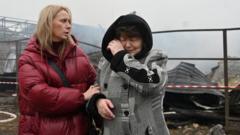
Ukraine continues to grapple with the ramifications of a relentless war that has entered its fourth year. With many of its troops weary and strained from extended combat, the crucial question arises: can Ukraine sustain operations for yet another year? Despite the exhausting pressure, Ukrainian forces persist in resisting Russian advances, particularly near Kurakhove, where recent fighting has escalated significantly. A key unit, known as the Black Pack, has been diligently working to stave off encirclement in Kurakhove. Operating from a safe house when not engaged, this unconventional group comprises individuals from various backgrounds—a vegan chef, a mechanic, a web developer, and an artist—all of whom have united under a common goal to defend their homeland. Their 31-year-old commander Surt, who enlisted shortly after the Russian full-scale invasion, initially anticipated a three-year war, yet he now finds himself mentally preparing for a potential decade of conflict. While there are discussions of potential negotiations—fueled by notable figures such as Donald Trump—it remains ambiguous whether a viable resolution can be achieved. Surt acknowledges Trump's aspirations for peace but is disillusioned about the chances of a fair agreement for Ukraine, expressing concern that many will have to cope with devastating losses without any semblance of justice. When asked whether he favors negotiation or continued combat, Surt's response is resolute: "Keep fighting." His sentiment resonates with fellow members like Serhiy, the vegan chef, who argues that negotiation may only lead to a temporary halt in the conflict.Although conditioned for ongoing warfare, Davyd, the artist in the unit, notices the unpredictability surrounding Trump's potential influence on the situation. As they alternate weeks between frontline duties and rest, the team remains committed to rigorous training routines to sustain morale and readiness. Denys, a newcomer to the unit from Germany, shares his determination, echoing the sentiment that if Ukraine fails to fight, outcomes will be dire. Despite this resolve, Denys suggests that a ceasefire warrants consideration, as he perceives certain inadequacies in the military’s manpower.In Dnipro, Ukraine's third-largest city—frequently under missile and drone attack—the pervasive atmosphere of war fatigue is tangible. Citizens strive to restore elements of normalcy, even attending a theater performance that briefly acknowledges fallen soldiers. Patrons yearn not only for reprieve from conflict but also for potential negotiations. This longing resonates deeply, especially among those displaced by the fighting. A group of elderly women residing in student accommodations reflects on their losses and expresses the pressing need for peace talks, underscoring the challenge of reconciling the devastation wrought by war.Ultimately, the ongoing clash poses difficult dilemmas, as more voices call for negotiation, signifying a potential pivot in public sentiment about the path forward for Ukraine. However, with fears of sacrificing territory for peace looming large, the path to resolution appears fraught with uncertainty for all parties involved.
