In brief
In a pivotal diplomatic engagement, Aung Hlaing's attendance at a China-hosted summit raises concern for Myanmar's opposition while indicating Beijing's commitment to stability in the region.
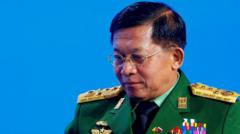
Myanmar’s military chief, Min Aung Hlaing, has embarked on his inaugural trip to China since he orchestrated a coup d'état in February 2021, which saw the ousting of the democratically elected government of Aung San Suu Kyi. His regime is grappling with substantial setbacks from local insurgents amid a civil war, raising uncertainties about how much longer he can maintain power. The significance of Hlaing's invitation to China, an important regional ally and Myanmar's largest trading partner, cannot be overstated, though it lacks the gravity of a formal state visit.Accompanied by a sizable delegation of officials and business representatives, Hlaing landed in Kunming, Yunnan province, on Tuesday to partake in a minor summit pertaining to the Greater Mekong Sub-region. Isolated since the coup, his participation marks a departure from the regional meetings typically attended by Myanmar’s leaders. His limited international engagement since the coup has mostly revolved around visits to Russia, a nation with which he has cultivated a close alliance.During his stay, he is slated to engage with Chinese Premier Li Qiang, who is leading the summit discussions. However, this is a relatively low-profile event that includes heads of state from neighboring authoritarian regimes such as Laos, Cambodia, and Vietnam. Given the importance of diplomatic gestures, China is acutely aware of the implications of Hlaing's presence at this gathering, especially after a perception emerged in the past year that Beijing was contemplating distancing itself from the military leader due to the escalating costs of the civil conflict.The ethnic insurgent coalition has experienced notable victories against the Myanmar military, particularly near the border shared with China. This coalition's objectives included curtailing scam operations that have victimized countless Chinese nationals. In the past year, speculation had arisen that China had tacitly supported the insurgents, driven by frustration over the junta's lack of decisive action.However, more recently, China has sought to mitigate the insurgency’s influence to prevent a total collapse of Hlaing's regime in Naypyidaw. Beijing appears to be pressing the military leader to establish a timeline for elections, aiming to restore cross-border commerce and safeguard extensive Chinese investments in Myanmar.Many factions opposed to the military's seizure of power have firmly rejected negotiations with Hlaing's council, demanding an end to military influence over Burmese politics and advocating for a new federal system. The National Unity Government (NUG), a representative body for the ousted administration, has voiced strong disapproval of the recognition implied by China’s invitation to Hlaing, with spokesperson Kyaw Zaw stating, “Myanmar’s people want stability, peace, and economic growth. It is Min Aung Hlaing and his group who are destroying these things.”Despite these concerns, the opposition's ability to challenge the junta remains limited, and China anticipates that a collapse of Hlaing's authority could ignite further disorder among rival armed factions. Thus, it seems China is willing to collaborate with the junta, notwithstanding its record of authoritarian practices.In the absence of substantial Western diplomatic efforts and with India focusing primarily on localized border disputes, China's engagement stands out as the only meaningful attempt to address the ongoing civil strife in Myanmar. The complexity and challenges facing the region underscore the crucial role of Beijing in navigating the turbulent waters of Myanmar's political landscape.