
In brief
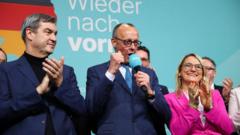
In a notable twist in Germany's electoral landscape, conservative leader Friedrich Merz and his Christian Democratic Union (CDU) scored a significant win in the recent elections, although they fell short of their anticipated 30% vote share. Meanwhile, the far-right Alternative for Germany (AfD) marked an unprecedented achievement, securing 20.8% of the vote, which is a record for the party.
Merz addressed a jubilant crowd of supporters, acknowledging the responsibilities ahead, while the mood at the AfD's headquarters remained tempered despite the second-place finish. In the east of Germany, the AfD emerged victoriously, capturing a projected 34% of the vote. Alice Weidel, the party's candidate for chancellor, claimed that the election signaled a demand for change, predicting potential fresh elections due to Merz's challenged coalition-building efforts.In contrast, the CDU experienced an 83% voter turnout—the highest since before the reunification in 1990—yet received only 28.6% of the vote. Merz's coalition efforts are complicated by the poor showing of the Social Democrats, who achieved a record low of 16.4%. With the mainstream parties maintaining a "firewall" against collaborating with the AfD, options for coalition partners are limited, and the Greens remain the most feasible option.Merz capitalizes on anti-immigration sentiment and promises strong leadership in Europe, particularly supporting Ukraine despite criticism from figures like former President Donald Trump, who praised Merz's victory. The election revealed distinct generational divides, as younger voters leaned toward the AfD and the Left party, which surged due to viral TikTok campaigns featuring its co-leader.Amidst this political shift, European leaders have expressed solidarity with Merz, emphasizing the importance of addressing shared challenges while navigating the complexities of this evolving political landscape.

