
In brief
Prime Minister Modi's optimistic remarks on India-China relations signal a potential thaw in bilateral ties, even as challenges persist, including border disputes and competing alliances with other nations.
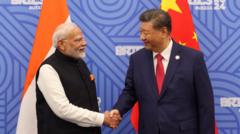
In a notable shift in tone, Indian Prime Minister Narendra Modi has expressed hope for strengthened relations with neighboring China. During a recent interview, Modi stated that normalcy has returned to the long-disputed India-China border, underscoring his call for increased cooperation between the two nations. This declaration stands out amid heightened tensions following a deadly border clash in Ladakh in 2020, marking the most serious conflict between the two rivals since the 1962 war.Chinese foreign ministry representative Mao Ning welcomed Modi's remarks, emphasizing the need for the two nations to act as partners in mutual success. While the Prime Minister’s outreach may seem significant, recent gradual improvements in relations have laid the groundwork for this optimism. Despite a fraught history, India and China maintain robust bilateral trade, with China remaining India's top trading partner post-clash. Collaborative efforts encompass various multilateral platforms including Brics and the Asian Infrastructure Investment Bank, showcasing shared interests in non-Western economic growth and countering regional terrorism.The camaraderie, however, remains fragile. India and China find themselves aligned with each other's main adversaries: India with the United States and China with Pakistan. Additionally, China's resistance to India’s claim over Kashmir and its blocking of India's role in prestigious global coalitions like the Nuclear Suppliers Group continue to create friction. Complicating matters further, China’s military operations off the Indian coast challenge New Delhi’s regional security.In light of these issues, both leaders, Modi and Chinese President Xi Jinping, convened at a Brics summit last October and pledged to foster cooperation. Talks have resumed on border management that could help rebuild trust, vital given the complex atmosphere. Future opportunities at international summits may bolster this momentum, provided that new dialogues can produce positive outcomes.Monitoring the investment landscape remains an important indicator as well. Chinese investments could not only alleviate India's significant trade deficit with China but also foster closer economic ties and stability. Further investments would enhance interdependence, lowering the chance for conflict amidst ongoing geopolitical adjustments.Moreover, regional politics are evolving, with several nations sharing borders with India recently seeing pro-China leadership. However, these governments are currently focused on balancing their relationships instead of fully pivoting towards Beijing. The geopolitical theater is poised for change, especially if the U.S. recalibrates its stance under a new administration. India’s interests would compel it to reassess its ties with China if perceived U.S. support wanes.As India's relations with China remain a complex tapestry of competition and cooperation, recent developments hint that Modi's conciliatory rhetoric may indeed signal a future path towards improved bilateral dynamics.
