In brief
This article explores the seismic forces behind the tragedy and its effects across borders.
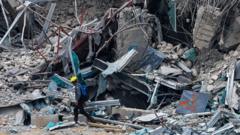
The devastating earthquake in Myanmar has left a significant toll, claiming more than 1,000 lives and causing widespread structural damage. Despite being a region often prone to seismic activity, the reach of this earthquake extended over 1,000 kilometers (621 miles) away, resulting in the remarkable collapse of an unfinished high-rise in Bangkok, a city generally considered safe from earthquakes.The earthquake's trigger stems from the dynamic nature of the Earth's surface, which is segmented into tectonic plates that are in constant motion. Myanmar sits at a pivotal intersection of four tectonic plates—the Eurasian, Indian, Sunda, and Burma microplate—making it highly susceptible to seismic events. Dr. Rebecca Bell, a researcher in tectonics at Imperial College London, noted the presence of the Sagaing fault, which runs throughout Myanmar and significantly contributed to the recent 7.7-magnitude quake.What sets this earthquake apart is its shallow depth of just 10 kilometers, meaning surface effects were amplified. The sheer intensity—greater than the atom bomb in Hiroshima—alludes to its destructive potential. The fault's straight trajectory can cause seismic ruptures to extend over vast areas, enhancing the magnitude of the tremors experienced, possibly even reaching regions like Thailand.Bangkok's geological conditions contributed to the extent of shaking felt in the city. Built on soft soil, the vibrations intensified and spread, resulting in notable disruptions. However, only one construction, the partially-built auditor general's office in the Chatuchak district, fell victim to this catastrophe.Bolstering construction practices after 2009, Bangkok established standards for earthquake resilience. Yet, the unfinished skyscraper seems to have employed outmoded "flat slab" construction methods, which are ill-suited for seismic safety, akin to a table with no lateral support. Dr. Málaga-Chuquitaype assessed that this design flaw was a crucial factor in the building's failure.On the other hand, while casualties and damages are prevalent in Mandalay, Myanmar, there lies a historical context of limited earthquake-resistant construction bolstered by ongoing poverty and civil unrest. Many Burmese buildings lack adherence to safety codes, especially alongside vulnerable landscapes like floodplains. This results in risks such as liquefaction, jeopardizing structural integrity during seismic events.Experts like Dr. So emphasize the ominous possibility of aftershocks, which could lead to further damages in Thailand and Myanmar due to energy shifting within fault lines. Ultimately, as the recovery progresses, both countries face the challenging aftermath of this powerful earthquake.