In brief
With Jack Draper's rise in the clay-court arena, we explore what makes an effective clay-court player, emphasizing fitness, movement, and adaptability, while highlighting the current state of British tennis.
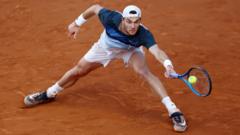
As the 2025 French Open approaches, the focus on what constitutes a successful clay-court player becomes crucial, especially as Britons like Jack Draper begin to stake their claim on the surface. Despite the historical struggles of British players on clay, Draper's recent achievements, including a final appearance at the Madrid Open, signal a shift in fortunes for the nation.Historically, the French Open has not been a stronghold for British players, with Andy Murray's final appearance in 2016 marking a notable moment in a lengthy drought since Sue Barker's 1976 victory. Last year, all six British players fell in their opening matches, highlighting the ongoing challenges, despite some positive momentum in recent tournaments.So, what skills are essential for thriving on clay? First and foremost, fitness and stamina are non-negotiable. Clay's slower surface creates longer rallies, demanding athletes to outlast their opponents both physically and mentally. Iga Swiatek is an exemplary clay player; her ability to cover the court and recover quickly allows her to unleash her powerful forehand. Jack Draper's fitness has significantly improved, thanks in part to his new physio Shane Annun and fitness trainer Matt Little. Engaging in rigorous physical preparation has enabled Draper to navigate through taxing matches, proving critical for success on clay.Moreover, incorporating spin into shots is vital. Rafael Nadal's destructive left-handed forehand epitomizes this strategy, allowing him to create high bounces and force opponents into less favorable positions. This ability to generate spin helps control the pace and trajectory of the ball, an essential component of setting up offensive plays.Another key aspect of excelling on clay is mastering the slide. Sliding enables players to reach difficult balls while maintaining stability for offensive returns. Draper and fellow player Jacob Fearnley focused extensively on sliding drills ahead of the tournament season, understanding its importance for quick adjustments on the court. It's worth noting that opportunities for young British players to develop on red clay are minimal compared to countries like Spain, where the majority of tennis courts are clay surfaces. This disparity poses a challenge for the development of future talents. Efforts are underway to establish more clay training opportunities in the UK, including partnerships with facilities in Spain where promising players can gain vital experience.As British players like Draper showcase their potential on clay, it is evident that fitness, spin, and adaptability are cornerstones for any aspiring star. The journey for British tennis on clay, while challenging, is poised for new beginnings as the French Open looms.