
In brief
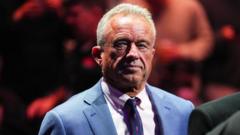
Kennedy, who has been appointed by President-elect Trump to lead the Department of Health and Human Services, faces both support and skepticism as he promises to tackle dietary health issues.
Robert F. Kennedy Jr., the newly appointed head of the Department of Health and Human Services (DHHS) under President-elect Trump, is determined to change the eating habits of Americans by targeting commonly consumed ultra-processed foods. From colorful additives in breakfast cereals to unhealthy oils in popular fast foods, Kennedy has voiced concerns over the detrimental impact of these ingredients on public health.At a rally in November, Kennedy expressed his discontent, stating, "We are betraying our children by letting [food] industries poison them." This statement highlights his commitment to initiating dietary reforms after having shifted his support from an independent presidential bid back to Trump.However, experts caution that Kennedy's approach could lead to significant pushback from the entrenched food industry, often referred to as "Big Food." Marion Nestle, a former NYU nutrition professor, stated, “What he’s suggesting is taking on the food industry. Will Trump back him up on that? I’ll believe it when I see it.” Many consider Kennedy’s selection controversial due to his history of making debatable health claims, such as linking vaccines to autism and asserting that Wi-Fi causes cancer.Despite mixed reception, some of Kennedy’s proposed reforms for the Food and Drug Administration (FDA) have garnered bipartisan support. Notably, Colorado’s Democratic Governor Jared Polis praised Kennedy on social media, welcoming ideas that may improve public health, but cautioned that “science must remain THE cornerstone of our nation’s health policy.”Under the mantra “Make America Healthy Again,” Kennedy has pledged to take aggressive action against unhealthy food products, especially in schools. He argues that excessive consumption of ultra-processed foods—hyper-processed snacks and meals linked to various health issues, including diabetes and cancer—poses significant risks to the next generation. During an interview with Fox News, he stated, “We have a generation of kids who are swimming around in a toxic soup right now.”Kennedy’s vision includes substantial changes to the FDA, which oversees both food safety and pharmaceuticals. He has publicly stated his intent to overhaul the agency, implying that it currently harbors elements of corruption. He has called for the dismissal of key officials, specifically targeting the agency’s nutrition department.His dietary agenda features proposals to eradicate certain food dyes and additives and even ban fluoride in water—a practice that many experts argue is beneficial for dental health. Critics have pointed out that some of Kennedy's suggestions, including advocating for raw milk consumption, could pose serious health risks to the public.While many in public health support his ambitious goals, they’ve also raised poignant concerns about possible unintended consequences. Dr. Peter Lurie from the Center for Science in the Public Interest highlighted the need to eliminate harmful food dyes but also noted that certain claims made by Kennedy lack scientific backing. He asserted that the problem is multifaceted and that confronting the food industry is considerably more complex than any individual reformist might suggest.Regulatory authority concerning food standards in the U.S. is divided between multiple agencies, implying that enacting Kennedy's vision may encounter significant bureaucratic hurdles. The FDA does not operate independently; it executes policies instituted by Congress while adhering to safety guidelines that govern the food industry.Kennedy’s bold rhetoric has encountered skepticism regarding its feasibility. Former FDA officials warn that enacting significant food reforms will likely face substantial opposition not only from industry advocates but also from within the political landscape itself. His previous efforts to advocate for dietary changes will require a collaborative approach to gain Congressional support, which seems unlikely given the current political climate.Notably, the food industry has already mobilized to voice apprehension about Kennedy's nominations and agendas. The Food Industry Association is advocating for a science-based and regulated policy approach as they seek to ensure a balanced dialogue about food safety moving forward.Despite challenges, some experts like Marion Nestle have pointed to potential pathways. She suggests that Kennedy could influence dietary guidelines that dictate nutritional standards at various federal institutions, thereby affecting the food landscape indirectly. By modifying these rules, Kennedy could encourage healthier food choices among the American public without facing the immediate legislative backlash.The intersection of Kennedy's health-focused strategies with his controversial past presents a complex picture of potential reform in America’s food sector. As the confirmation process unfolds and practical applications of his proposals emerge, the dialogue surrounding dietary health in America is set to intensify.

