In brief
A detailed look into the meticulous preparation and engineering that allows the Sistine Chapel to communicate the election results through smoke.
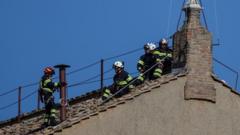
When a new pope is to be elected in the Catholic Church, millions around the world eagerly await the signal that emerges from the Sistine Chapel’s chimney. The rising smoke intricately communicates whether a decision has been reached—black smoke implies no pope has been elected, while white smoke signifies "Habemus Papam" or "We have a pope." A well-managed team of engineers and Church officials ensure this centuries-old tradition retains its clarity and significance.The recent passing of Pope Francis has brought attention back to the conclave, scheduled for May 7, where cardinals will gather at St. Peter's Basilica for a traditional Mass and later vote in the Sistine Chapel. The combination of burning ballots and smoke used for communication dates back to the 15th century, conceived as a response to previous election frustrations and delays.Even with modern communication tools at our disposal, the Vatican has opted to maintain the unique smoke tradition as a means of connecting to religious symbolism. "Smoke has served as a medium of human communication with the divine for centuries," stated Professor Candida Moss from the University of Birmingham. The rising smoke engages the faithful, fostering a communal experience shrouded in sacred mystery.The technical aspects of this age-old ritual are nothing short of remarkable. Two specially designed stoves are set up within the Sistine Chapel; one dedicated to burning ballots while the other generates the smoke signals. To ensure accuracy and safety, a flue connects these stoves to a discreetly installed chimney atop the chapel, requiring careful assembly and testing. Vatican firefighters are also on standby during the process to mitigate any potential mishaps, emphasizing the ritual's high stakes on an international scale.Experts revealed that the smoke's color is produced via precise chemical combinations. Black smoke is made from burning a mix of potassium perchlorate, anthracene, and sulfur, while white smoke results from potassium chlorate, lactose, and pine rosin combustion. This scientific approach aims to eliminate any ambiguity that could arise from previous methods, which sometimes produced grey smoke due to damp straw.Historically, the added ring of bells, a practice initiated during Pope Benedict XVI's papacy, serves as a secondary confirmation of the election result. While there have been proposals for modernizing the smoke indication system, the allure of tradition remains strong. The Vatican values the blend of continuity and ritual, making innovations in this area unlikely.As preparations proceed for the conclave, the Vatican's dedication to age-old processes amid evolving times underscores its commitment to maintaining a unique narrative in the selection of a new pope.