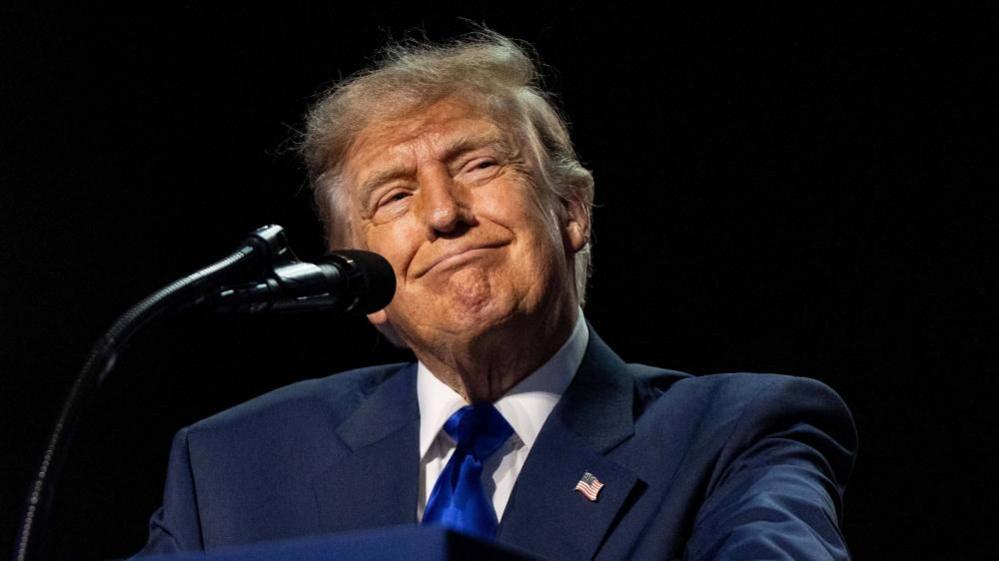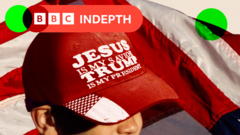
Standing in front of a crowd packed with hopeful supporters in a Florida convention center, Donald Trump boldly proclaimed that many believe God had preserved him for a purpose: to revive America. This proclamation echoed a dominant theme of his election campaign—his assertion of being a God-chosen leader. Even prior to a near-fatal incident on July 13 in Pennsylvania, millions of Americans felt called by their faith to support him, viewing Trump in almost biblical terms.
Trump's supporters have not shied away from portraying him as a savior figure. For instance, renowned TV evangelist Hank Kunneman described the struggle in America as one between good and evil, suggesting there's an “anointing” on Trump that invokes fear in his adversaries. Actor Jim Caviezel humorously dubbed Trump “the new Moses,” reflecting the profound admiration some hold for him.
One prominent figure among his supporters is Reverend Franklin Graham, son of the famed preacher Billy Graham. Graham firmly believes that Trump has been chosen by God for a crucial mission, pointing to narrowly avoided catastrophe as divine intervention. He brushes aside concerns regarding Trump’s past conduct by invoking the biblical perspective that all humans are flawed.
For many Christians, Trump's record in office—including judicial appointments supportive of anti-abortion stances—underscores their understanding of his integrity. Graham notes that these victories are significant for evangelical Christians, framing him as a defender of religious liberties against perceived liberal threats.
Despite Trump’s considerable evangelical support, he hasn't positioned himself as a particularly devout Christian throughout his campaign. Political experts suggest he adopted a strategy of aligning with fading church demographics, stating that his administration could restore Christian influence in society.
However, the American Christian landscape is evolving. Pew Research shows a decline in U.S. adults identifying as Christians from 90% in the early 1990s to 64% in recent years. This change highlights a growing demographic of religiously unaffiliated individuals and points to a potential challenge for Trump’s appeal moving forward.
In stark contrast to Graham's viewpoint, Reverend Monte Norwood from Atlanta expresses dismay over Trump's rhetoric and perceived character. He criticizes the idea that support for Trump aligns with true Christian values, arguing that such endorsements propagate hypocrisy among white conservative Christians.
Historical trends in voting among Christian groups show a consistent Republican preference among white Christians, while non-white and unaffiliated religious groups typically lean Democratic. Recent elections have hinted at shifts, with some non-traditional Republican voters possibly drawn to Trump through economic concerns and particular social issues.
Though Trump garners strong backing from white evangelical voters, recent polling indicates significant divides within the Christian community. While many view Trump’s presidency as a means to reclaim faith-based authority, others perceive a detriment to Christian values in his conduct.
As shifts in demographics and religious adherence continue, Franklin Graham remains hopeful about Trump's influence on preserving faith in America, suggesting that his election could mitigate progressive legislation impacting religious freedom.
As the 2024 election approaches, the welding of faith and politics raises questions about the future of Christianity in America. For some, Trump's presidency inspires hope for a Christian revival, while others remain apprehensive about the implications for American values and their communities. The unfolding events will determine whether this fervent faith in Trump can withstand the changing tides of demography and belief in the United States.