In brief
U.S. Defense Secretary Pete Hegseth praised South Korea's commitment to raising military spending by 8.2% next year during a press conference in Seoul. Meeting with South Korean Defense Minister Ahn Gyu-back, Hegseth expressed encouragement over the focus on modernizing the military to bolster deterrence against North Korea. He affirmed that the U.S.-South Korea alliance remains strong, addressing concerns about regional threats while advising continued nuclear deterrence efforts. South Korea's Joint Chiefs of Staff reported North Korea's recent artillery tests, further complicating an already tense security environment.
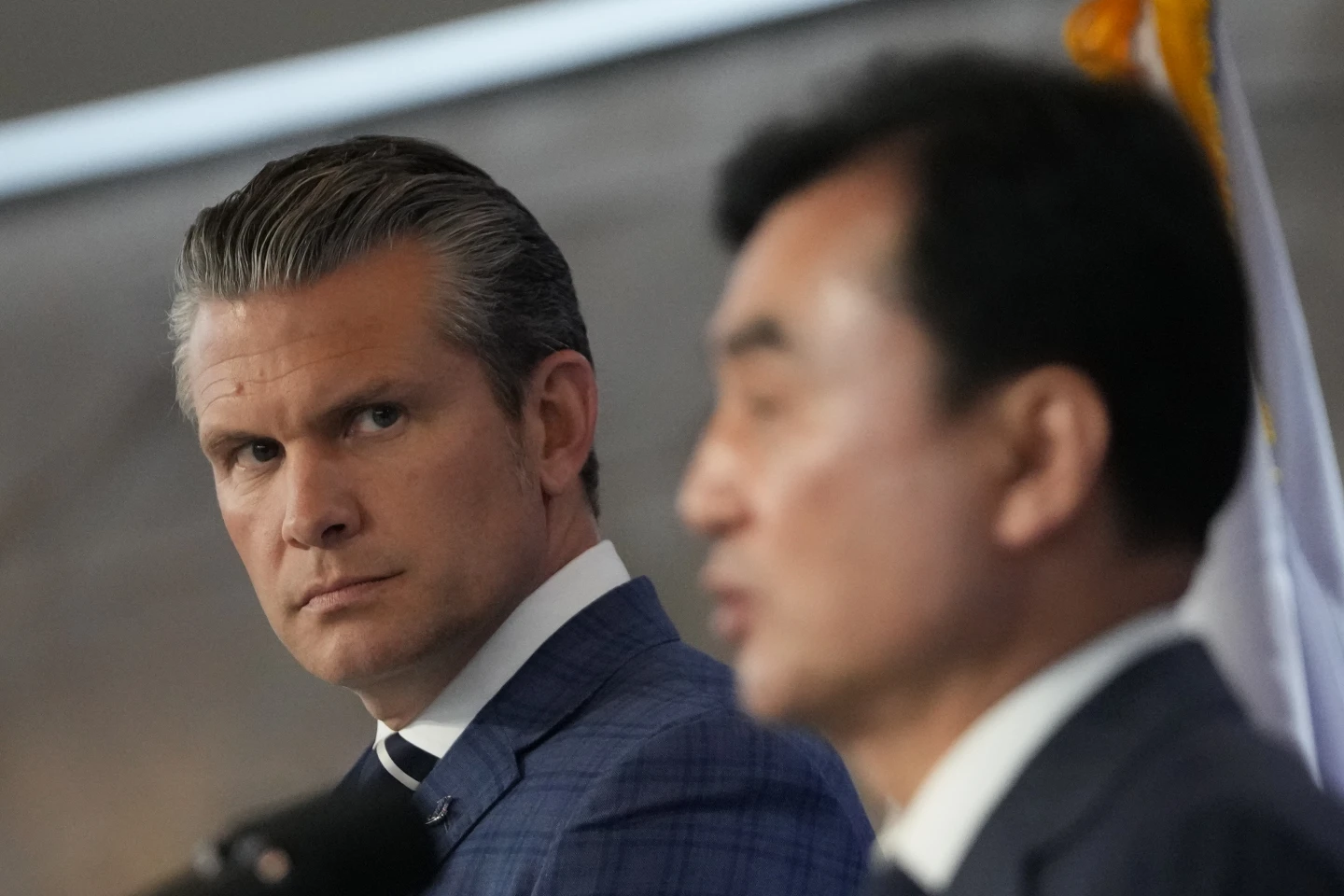
SEOUL, South Korea (AP) — U.S. Defense Secretary Pete Hegseth praised South Korea’s plans to raise its military spending, saying on Tuesday that the Asian ally will take a larger role in defending itself from North Korean aggressions as they prepare for regional contingencies.
Modernizing the decades-long alliance between the U.S. and South Korea is a key issue, as the U.S. seeks to allow South Korea to strengthen its conventional defense capabilities, enabling Washington to redirect focus towards China.
After annual security discussions with South Korean Defense Minister Ahn Gyu-back in Seoul, Hegseth expressed being greatly encouraged by the commitment to increase defense spending, stating the investments would enhance South Korea's ability to counter North Korea.
In an earlier parliament speech, South Korean President Lee Jae Myung urged lawmakers to approve an 8.2% hike in next year’s defense budget, aimed at modernizing military equipment and decreasing reliance on U.S. support.
Hegseth reiterated concerns about a dangerous security environment, affirming that the U.S.-South Korea alliance is stronger than ever.
During the discussions, both nations agreed to demonstrate U.S. warship maintenance and repair operations in South Korea, integrating South Korea’s shipbuilding capabilities to maintain readiness for any crisis.
While Hegseth underscored the alliance's aim to address North Korean provocations, he noted the importance of considering other regional threats. He conveyed the significance of maintaining a flexible strategy to adapt to various contingencies.
In recent years, the U.S. and South Korea have explored approaches to merge U.S. nuclear capabilities with South Korean conventional forces, given that South Korea does not possess its own nuclear arsenal.
Ahn dispelled speculation regarding South Korea pursuing its own nuclear weapons or advocating for the redeployment of U.S. tactical arms that were withdrawn in the 1990s, emphasizing commitment to the nuclear non-proliferation treaty.
Both leaders left the meeting without issuing a joint statement, but Hegseth reassured that the two nations have no significant disagreements.
Following Hegseth's arrival, South Korea's Joint Chiefs of Staff reported detecting North Korea conducting artillery fire exercises, indicating heightened tensions ahead of the discussions aimed at solidifying defense cooperation.