
In brief
With the potential to unravel decades of economic cooperation, Trump's tariffs have left many African nations questioning their future in the US market.
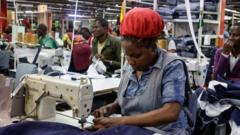
Thursday marked a grim turning point for Lesotho's textile industry as it faced the brunt of President Donald Trump's announcement of a staggering 50% import tariff on goods headed to the United States. This sudden policy change was met with despair and disbelief from local businessman Teboho Kobeli, who runs Afri-Expo Textiles, a factory that employs around 2,000 workers in the country. Kobeli expressed his anxiety about the potential loss of a significant portion of the US market, which relies on affordable textile exports from Lesotho.Once considered a success story under the African Growth and Opportunity Act (Agoa) - a US initiative designed to facilitate trade with Africa by allowing duty-free access for certain goods - Lesotho's economic standing is now at a precarious crossroads. Agoa aimed to bolster the continent's economic landscape by shifting from aid to trade, with the hope of spurring job creation and reducing poverty.The ramifications of Trump's announcement extend beyond Lesotho, igniting fears that the Agoa framework may be on the verge of collapse. The confusion around these new tariffs raises the question of how they interact with the existing trade agreements set up under Agoa. While other nations, such as South Africa, claim that this puts Agoa at risk, Kenya's officials have offered a glimmer of hope, suggesting that its lower tariff rate of 10% may preserve its competitiveness in the US market.However, as Trump’s tariffs loom large, they cast a shadow over the future of Agoa, especially as a renewal of the act is on the horizon. The Clinton-era law, which has enabled thousands of jobs and billions of dollars in trade since its inception, is increasingly seen as outdated. Its relevance is now being challenged severely amid recent political changes.Despite significant contributions from countries like South Africa and Nigeria, Lesotho has emerged as a noteworthy player in the textile industry, supplying major retailers like Walmart and GAP. With the loss of Agoa privileges, analysts warn of dire consequences; a World Bank report forecasted economic damage amounting to 1% of GDP within two years if Lesotho were to lose its trade benefits.Voices like Mukhisa Kituyi, a former UN trade chief, express concern that the new tariffs might signify the death of manufacturing in Lesotho. Meanwhile, trade analysts suggest that countries with lower tariff rates might still navigate the new economic landscape differently to retain their positions in American markets.Experts have pointed out that Trump's tariff strategies lack clarity and may lead to diminished American influence in Africa, opening avenues for China's growing economic engagement across the continent. With questions surrounding the longevity of Agoa and America’s strategic interests in Africa, the implications of these tariffs could reverberate throughout trade relations for years to come.Analysts speculate that if Agoa succumbs to political whims, African nations must rally to establish stronger internal economic frameworks and seek new trade partnerships to adapt to these turbulent changes. The pressing need to solidify the continental free-trade area and diversify markets is critical as nations navigate the uncertain territory spurred by shifting US policy.

